
The Himalaya isn’t just Nepal. Across the border, in India, lies a territory just as high and far less travelled: from the snow-covered valleys of Himachal Pradesh, where you learn real mountaineering, to the most remote corners of Ladakh, where unnamed, unmapped peaks still exist.
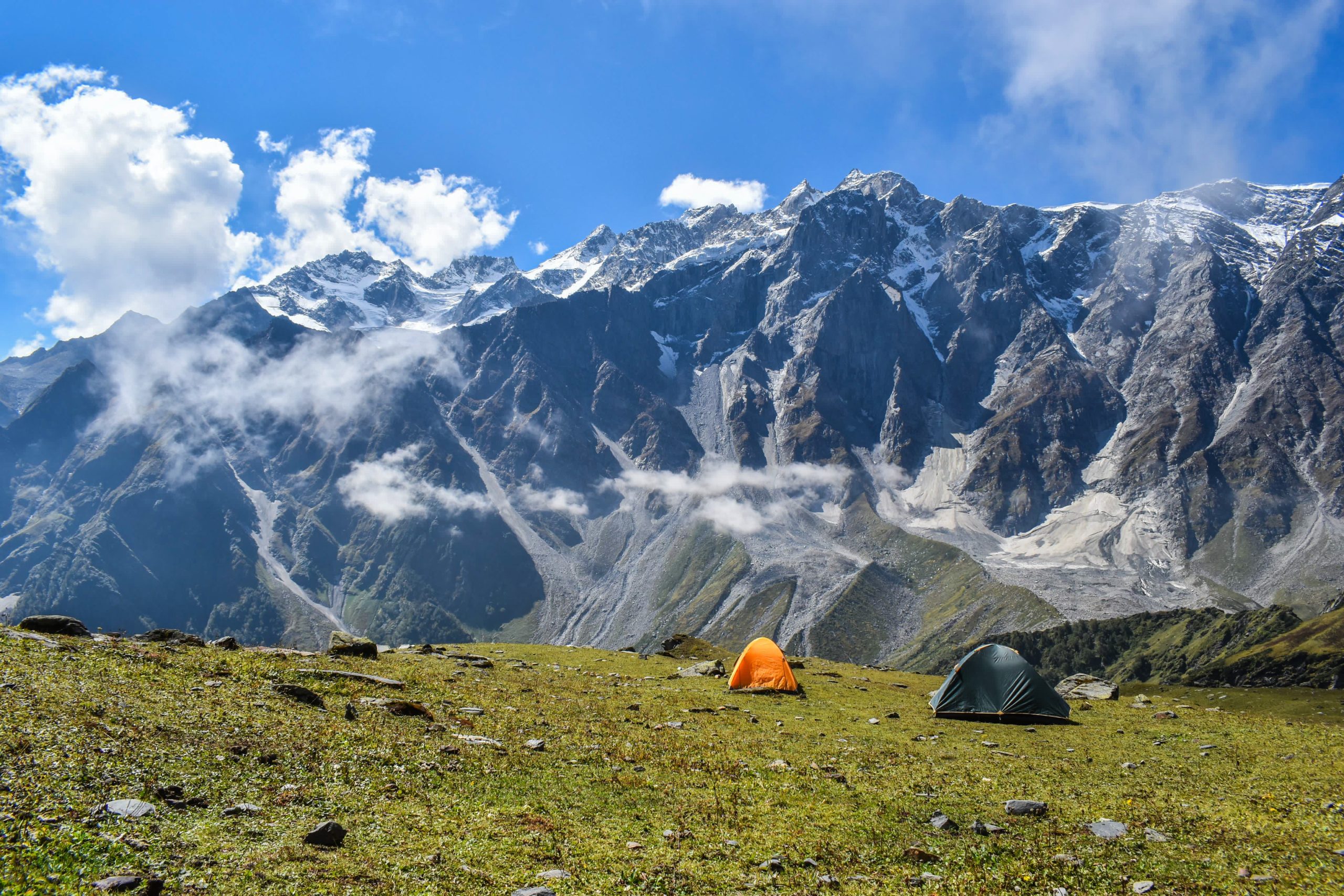
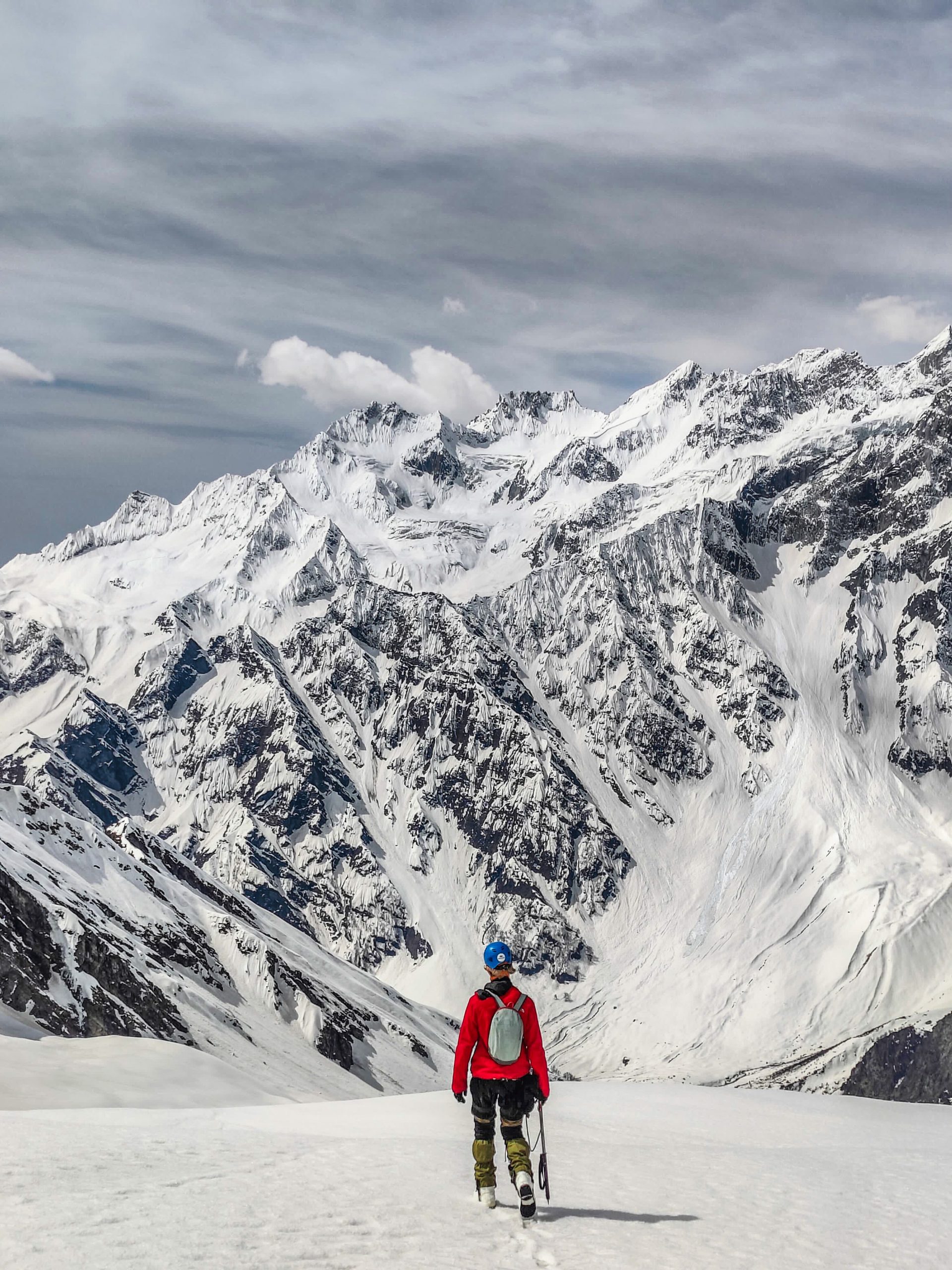
Just outside Manali, in the Solang valley, Himachal Pradesh hides one of the best peaks for making the jump from trekking to real mountaineering. Friendship Peak, at 5,289 meters, isn’t a scenic walk: it’s real snow, ice axe, crampons and rope, but at a manageable scale, with training included before the summit attempt.
There are two ways to get there: the overnight bus from Delhi, an endless 12-14 hours on mountain roads covering 550 km, or a 90-minute flight to Bhuntar airport, 50 km from Manali. Manali itself gets plenty of domestic tourism, especially in summer, but as soon as you head up into the peaks around it, the picture changes completely: very few people, and almost no one on the peaks themselves.
Manali has been India’s gateway to mountaineering for decades — it’s home to the Atal Bihari Vajpayee Institute of Mountaineering, one of the country’s most respected training centers.
The route climbs from the Solang valley, at 2,700 meters, through the camps at Dhundi (3,500 m) and Bakka Thach (4,200 m), to a final camp near 4,500 m before the summit attempt. The final stretch has 30 to 45 degree slopes requiring crampons and ice axe technique, usually with fixed rope on the summit ridge. Before attempting it, a day of snow training is included: ice axe use, self-arrest, crampon technique. The full expedition takes between 7 and 8 days from Manali, and the best season is May and June, while snow still covers the route well.
If Himachal is the school, Zanskar is the territory still waiting to be discovered. It’s one of the most isolated areas of the Indian Himalaya: a high-altitude desert within Ladakh, closed to foreigners until 1974 and still only reachable today via a pass over 4,000 meters or, in the depths of winter, by walking across the frozen river. Some of its valleys are among the coldest inhabited places on the planet.
In 2024, Isa Argüelles, founder of Thin Air, conceived an expedition to this area: she worked with the local provider on the ground, back when reliable maps of the region barely existed. After many months of searching, they chose a virgin peak, never climbed before, in a completely unexplored area, with no guarantee of what they’d find on the route or at the summit. She then invited a fellow climber to join the expedition. It’s the kind of exploratory mountaineering that barely exists anymore in the Nepali Himalaya — the classic routes have been open for decades — but that’s still possible in corners like Zanskar.
See the Friendship Peak