
The Tien Shan rises south of Bishkek like a white wall almost nobody outside Central Asia knows how to name: peaks of rock and ice, glaciers you can reach in under an hour by car, a silence broken only by crampons biting into ice. This is where real mountaineering gets learned.
A lot of people who want to get into mountaineering don’t know where to start: how to use crampons and an ice axe, how to move roped up on a glacier, what you actually need before taking on a technical peak. Our course in Kyrgyzstan answers that with a real progression, day by day — you start with the essential knots and basic handling, and end up applying it on real terrain, with your own guide team. It’s the technical foundation that later serves you on any mountain in the world.
You don’t need to have ever held an ice axe. The group sets the pace: if you already have experience, the progression speeds up and more demanding terrain comes in from the start.
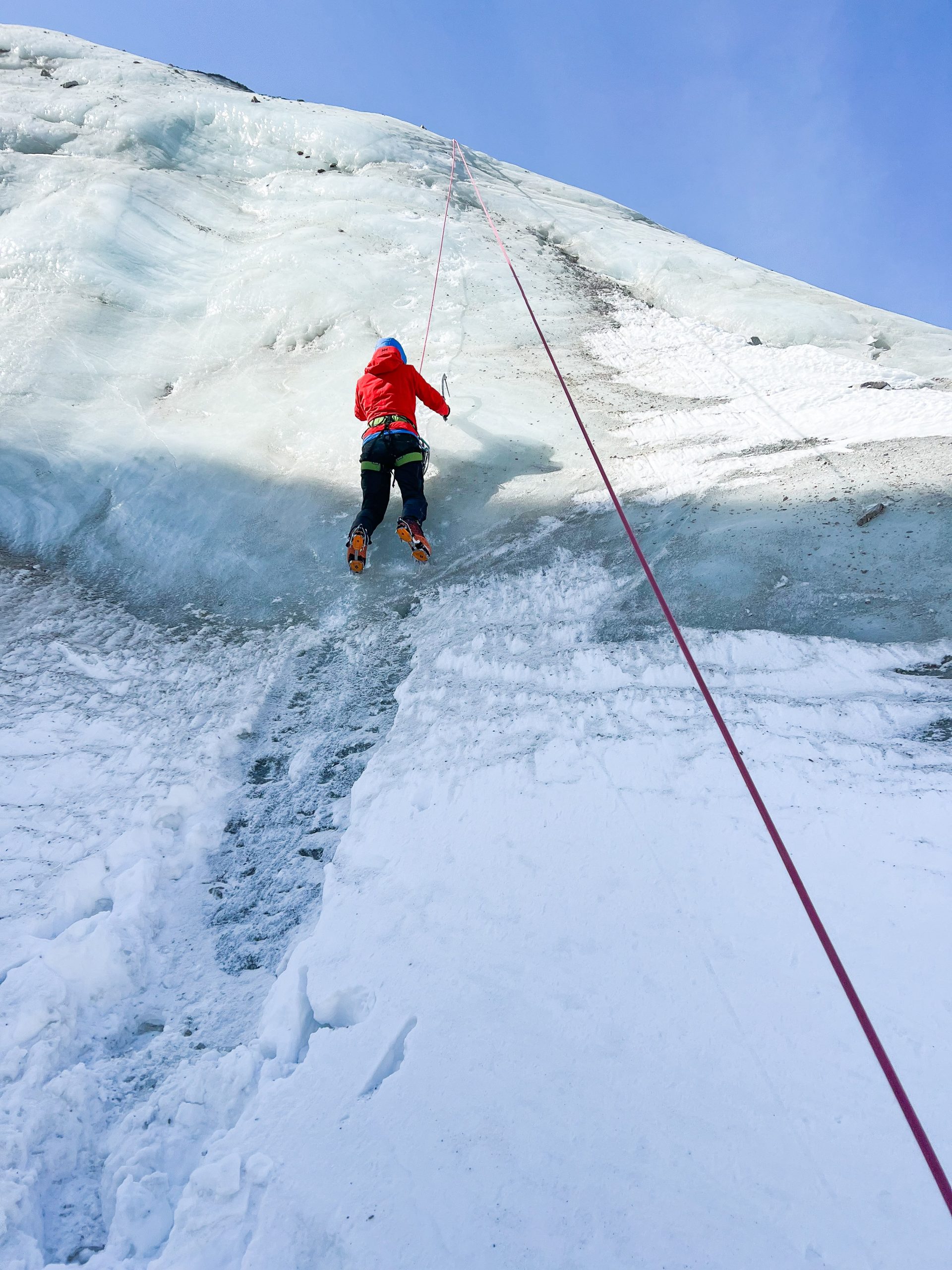
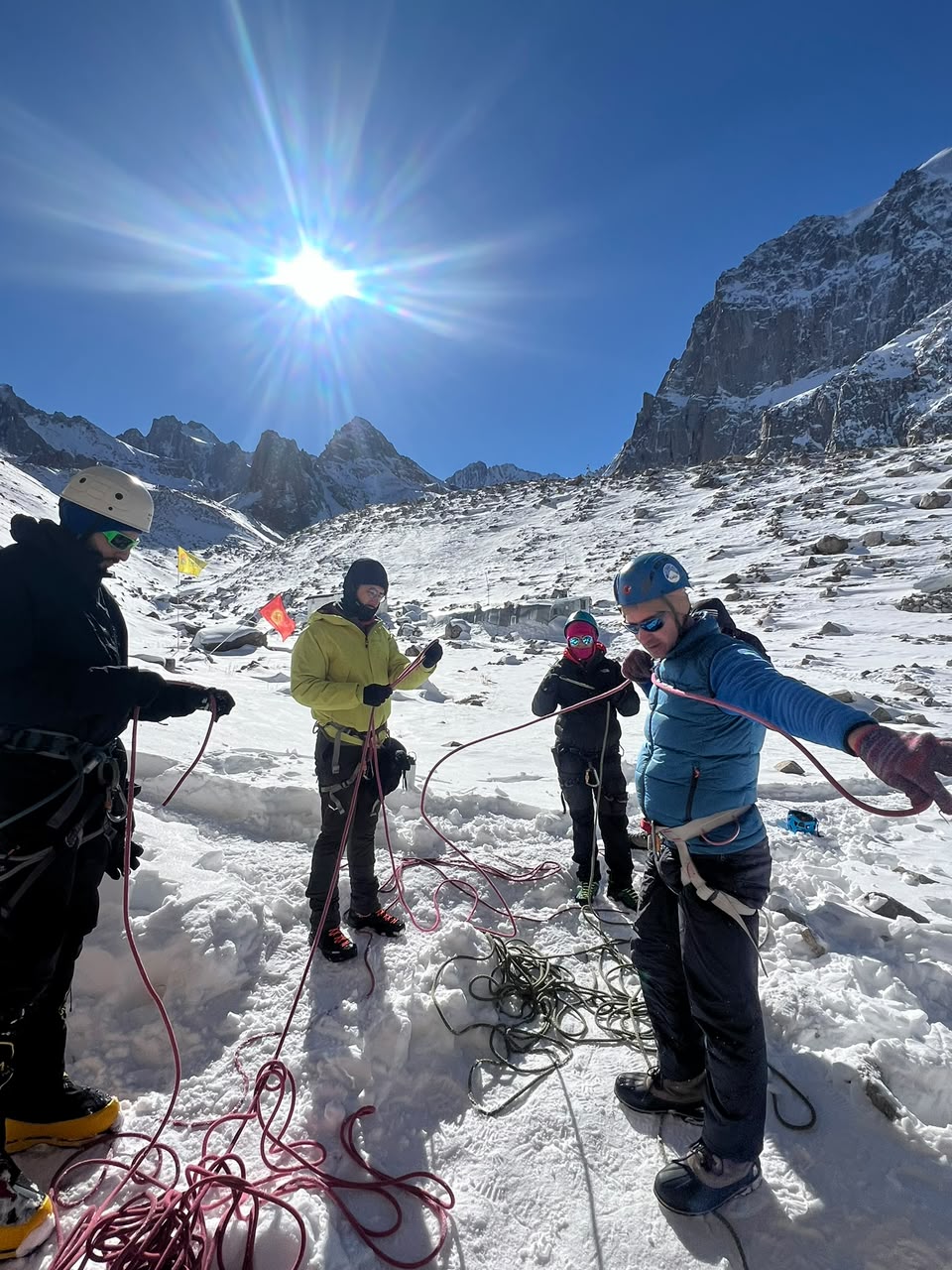
Here the terrain doesn’t need imagining: accessible glaciers and real variety to practice what you’re learning, from crevasses and snow slopes to easy rock. Groups are small and there’s space to spare, so there’s no waiting your turn on a fixed rope or queuing on the glacier. When you’re building technique from scratch, or sharpening it, that means more real time with your guide, at the pace you need.
All of this happens in the Ala Archa valley, a national park about 40 km from Bishkek, just under an hour by car. The classic base is Ratsek Hut, at 3,400 m: a Soviet-era building still standing and still in use, sleeping around 35 people, and the starting point for almost every route in the area.
For those who already have experience and want something more technical, a small cluster of huts sits close to Ratsek, within a short radius, including the one below Korona — all giving access to higher-level peaks. Korona itself, at 4,860 m, is one of the range’s best-known peaks for its technical walls. It’s not what we do on this particular course, but it’s right there, waiting, for anyone who wants to come back for more.
Bishkek is a quiet city with Soviet-era architecture, markets, and street life you can take in over a day or two before or after the course. And if you move through the surrounding valleys in summer, you’ll run into real nomadic camps: families who move up with their animals to graze between June and September, live in yurts, and will offer you tea and kumis, fermented mare’s milk, if you pass by. It’s one of the few places left in Central Asia where that nomadic life is still this visible — not staged for tourists.
The base course is 4 days focused on technical progression. For anyone who wants to put what they’ve learned into practice with a real objective, we offer the summit of Uchitel Peak as an optional extension, at no extra cost beyond the days it adds. It’s the best way to close it out: you climb a real summit with what you just learned.