
Gear is not a minor detail: on a high-altitude trek, it can be the difference between finishing the expedition and having to turn back before you get there. The wrong pair of socks, a waterproof layer that isn’t enough once the temperature drops, boots you never broke in — any of those, a simple annoyance at sea level, gets multiplied by ten at 4,000, 5,000 or 6,000 metres. There’s no shop around the corner up there, and no room to improvise on the fly.
The good news is you don’t need to spend a fortune on the latest technical gear. What you need is to understand what each piece is for and why it’s on the list — so you can build your kit around what you already own, buy only what you’re genuinely missing, and show up at the trailhead with exactly the right pack: nothing missing, nothing extra.
Each destination has its own specific list — Annapurna, Everest, Langtang and Kilimanjaro don’t ask for quite the same things — but these are the principles that repeat across (almost) any high-altitude trek.

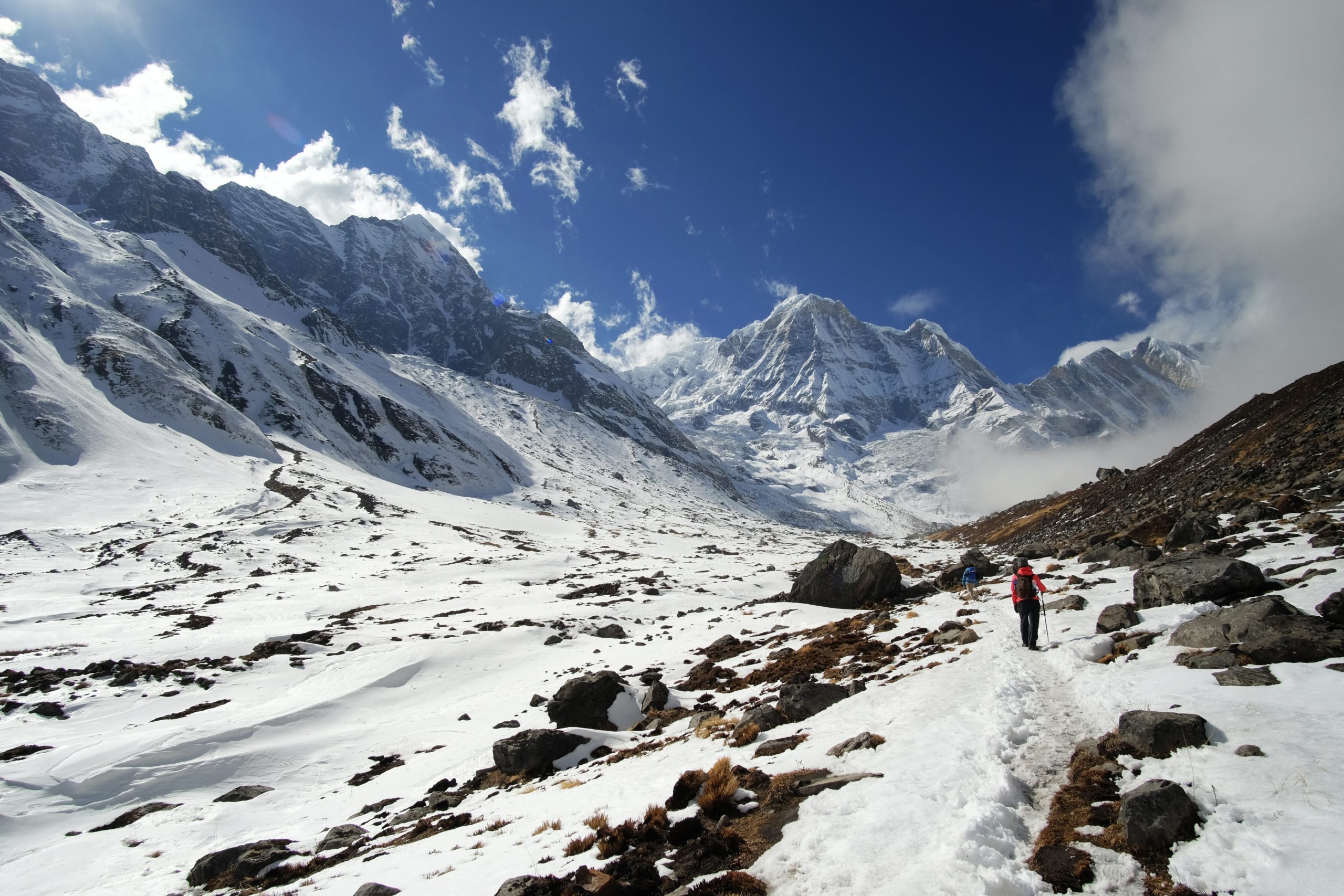
What actually works at altitude isn’t one expensive piece of clothing — it’s several thin layers you can add or remove as the temperature shifts through the day, and in the mountains it shifts a lot: sweating on the climb at midday, biting cold the moment the sun goes down or you stop moving.
- Base layer: thermal, moisture-wicking, never cotton (cotton soaked in sweat chills you down, and at altitude that’s dangerous, not just uncomfortable).
- Mid layer: fleece or a light down jacket, for insulation.
- Outer layer: a waterproof, windproof jacket, for rain and wind.
- For nights and the summit: a heavier down jacket, just for the coldest moments.
The goal is to sweat as little as possible while you walk — it’s better to be a little cold at the start than to soak your base layer, because that moisture is what chills you the moment you stop.
Your waterproof jacket doesn’t belong at the bottom of your pack. Mountain weather changes fast — a clear sky can cloud over in twenty minutes — so your rain/wind layer always needs to be within reach, in a top pocket or the most accessible part of your bag, ready to put on without having to stop and unpack everything.
You lose more heat through your head, hands and feet than through the rest of your body, so covering your extremities well matters as much as insulating your torso. A hat, gloves (carry a spare pair — once they’re wet, there’s no way to dry them on the trail) and the right socks make more of a difference than a pricier jacket.
A very common mistake: socks that are too thick inside the boot. If your foot is too tight, circulation gets cut off and you end up colder, not warmer — a mid-weight technical sock that leaves a little room in the boot works better. Pack several spare pairs; feet sweat even in the cold, and changing socks partway through a trekking day is one of the small things your body appreciates most.
Worn-in or brand-new trekking boots are the number one cause of problems on the trail — wear yours for several weeks before you leave so your feet already know them. Your sleeping bag should match the actual night-time temperature you’ll face at the itinerary’s highest altitude, not the destination’s average temperature overall.
Once you reach camp, it’s worth having something comfortable that isn’t your trekking boots — light shoes or down booties for walking around camp let your feet rest and stay warm without the boot on. It’s a small thing, but after a long day it makes a real difference.
Spare “regular” clothes, too many extra pairs of socks, or technical climbing gear the trek doesn’t call for — all of that is extra weight you feel every hour on the trail. Before every departure we send you the specific gear list for that destination and date, so you know exactly what to pack and what to leave at home.
See our destinations: Everest Base Camp · Annapurna · Langtang · Kilimanjaro