
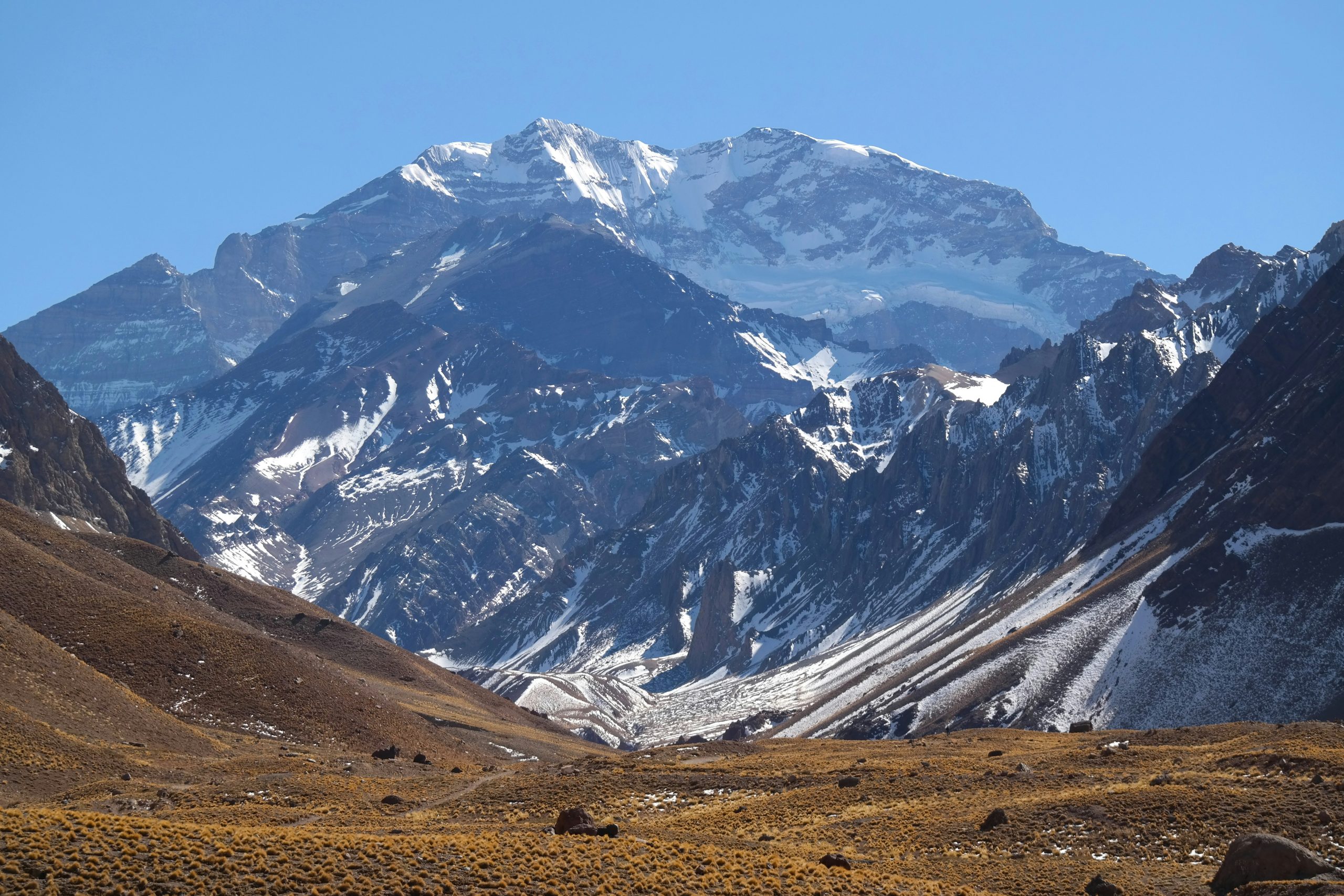
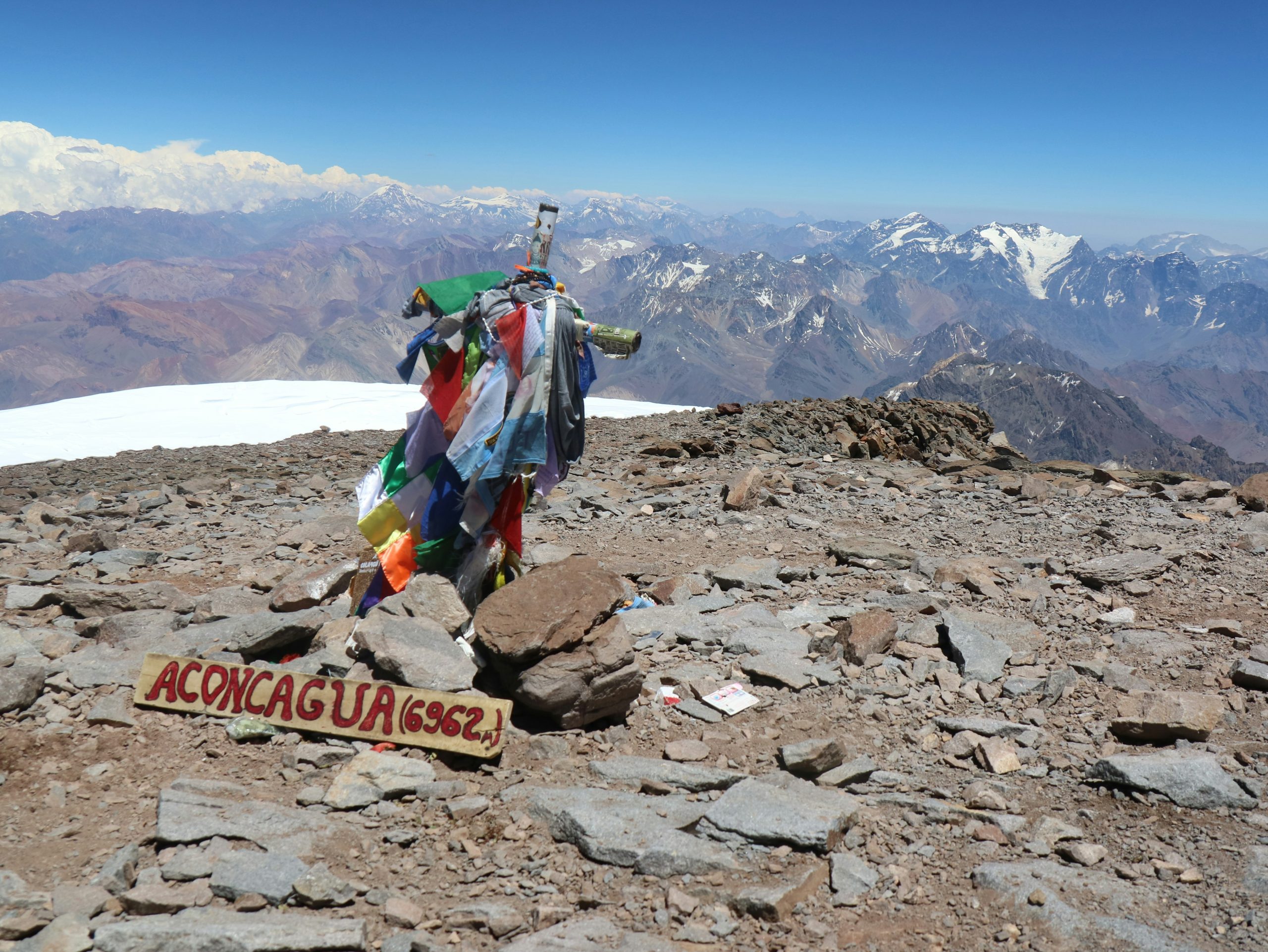
Aconcagua is in the province of Mendoza, Argentina, deep in the Andes, close to the border with Chile. At 6,962 m it’s the highest peak in the Americas and in the entire Western Hemisphere, and one of the Seven Summits — the highest peak on each continent. That alone tells you what this is: not just another trek, but a serious high-altitude challenge, with close to three weeks of expedition and very hard nights above 5,000 m.
Via its normal route —the one we follow— it doesn’t require climbing technique or having stood on a summit of that level before. But “no experience” doesn’t mean “starting from zero.” What do we actually consider relevant experience here? You don’t need to know how to climb, but you do need to have been on a mountain before: someone who moves over uneven terrain with some ease, pacing their effort, is not the same as someone seeing it for the first time on expedition day. It helps a lot to have been at 4,000 or 5,000 m before and to know how your body reacts to altitude —not everyone handles it the same way—, and it helps to have done multi-day treks back to back, to know what it feels like to accumulate fatigue day after day without fully recovering at night.
On top of that comes physical preparation at home, months before you leave. Base-level cardio and strength work —legs and core, above all— are the real foundation of whether you’ll enjoy the expedition or suffer through it; there’s no shortcut for those hours of training beforehand.
It’s not a question of technique, it’s a question of accumulated endurance — many days in a row carrying weight, sleeping in a tent, cold, with less and less oxygen available. People who don’t make the summit almost never fail from a lack of raw strength, but from not having trained their base endurance or spent enough time at altitude beforehand.
Our Aconcagua expedition runs 19 days, with the acclimatisation days built into the itinerary — we don’t go fast, we go safe. Experienced guide, small group, and a training guide we send you in advance so you arrive knowing exactly where you stand.
If you don’t have a mountain background but are willing to train seriously in the months before, Aconcagua is within reach. What we don’t recommend is attempting it without that preparation, however well guided you are.
See the Aconcagua expedition