
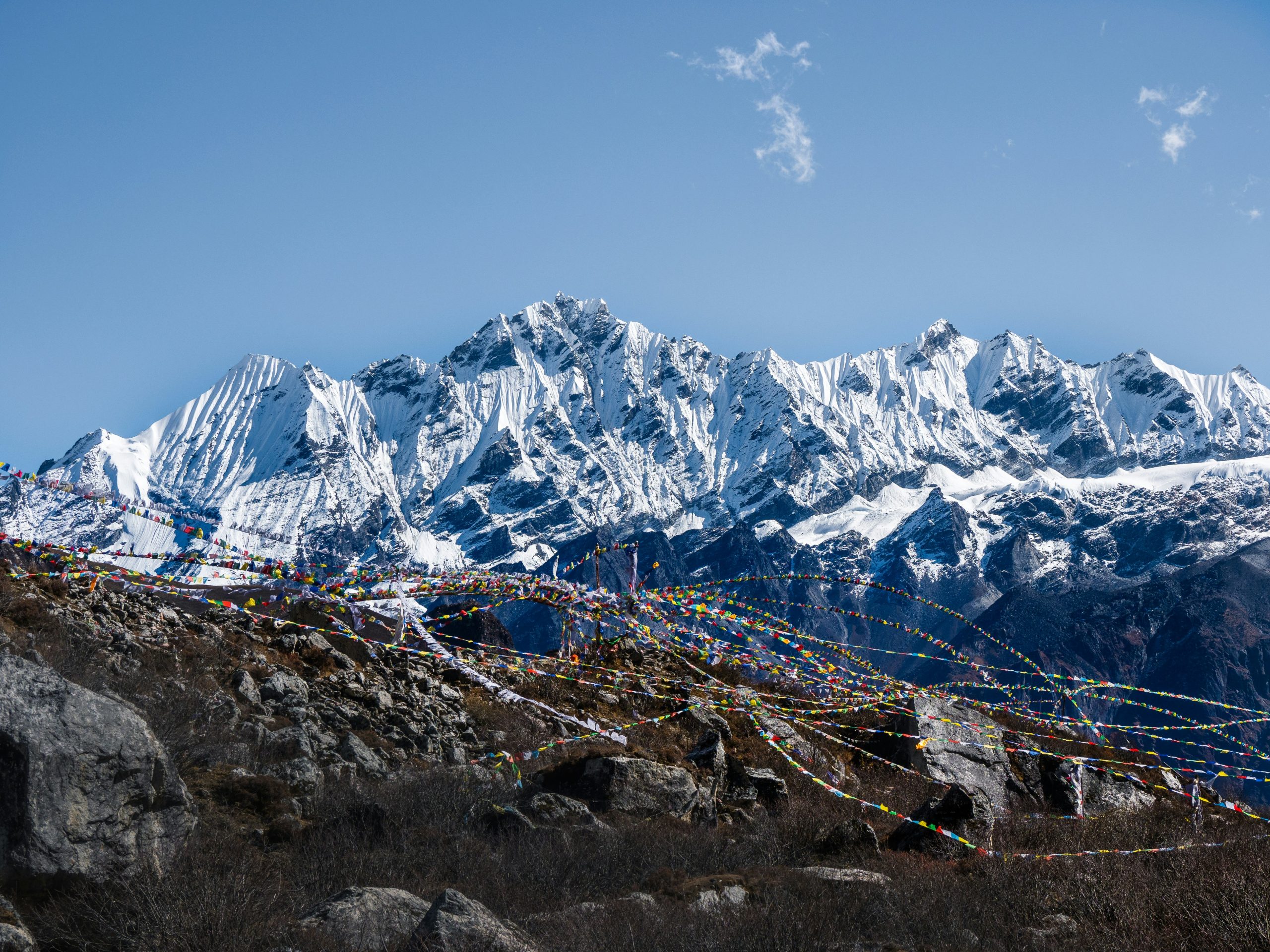
The Langtang Valley is the quiet alternative to the Everest routes. You get there by road from Kathmandu, with no need for a flight to a mountain airstrip or the weather windows that so often cancel Lukla flights, and the trek is shorter and doesn’t climb as high as Everest Base Camp. It’s also one of the least crowded valleys in Nepal, and sitting almost against the Tibet border, it keeps a sense of isolation — of forest, of glacier, of small villages — that’s getting harder to find on other routes in the Nepali Himalaya.
The trek starts with a road journey from Kathmandu to Syabrubesi: about 122 km that takes roughly 6 hours, climbing and dropping through terraced hillsides, river valleys and small villages, with paved road giving way to a dirt track on the final stretch. It’s a mountain-road kind of day, with switchbacks and the odd stop to stretch your legs, but without the uncertainty of a flight to a short high-altitude airstrip: you get in the van in the morning and, by the afternoon, you’re already at the trailhead.
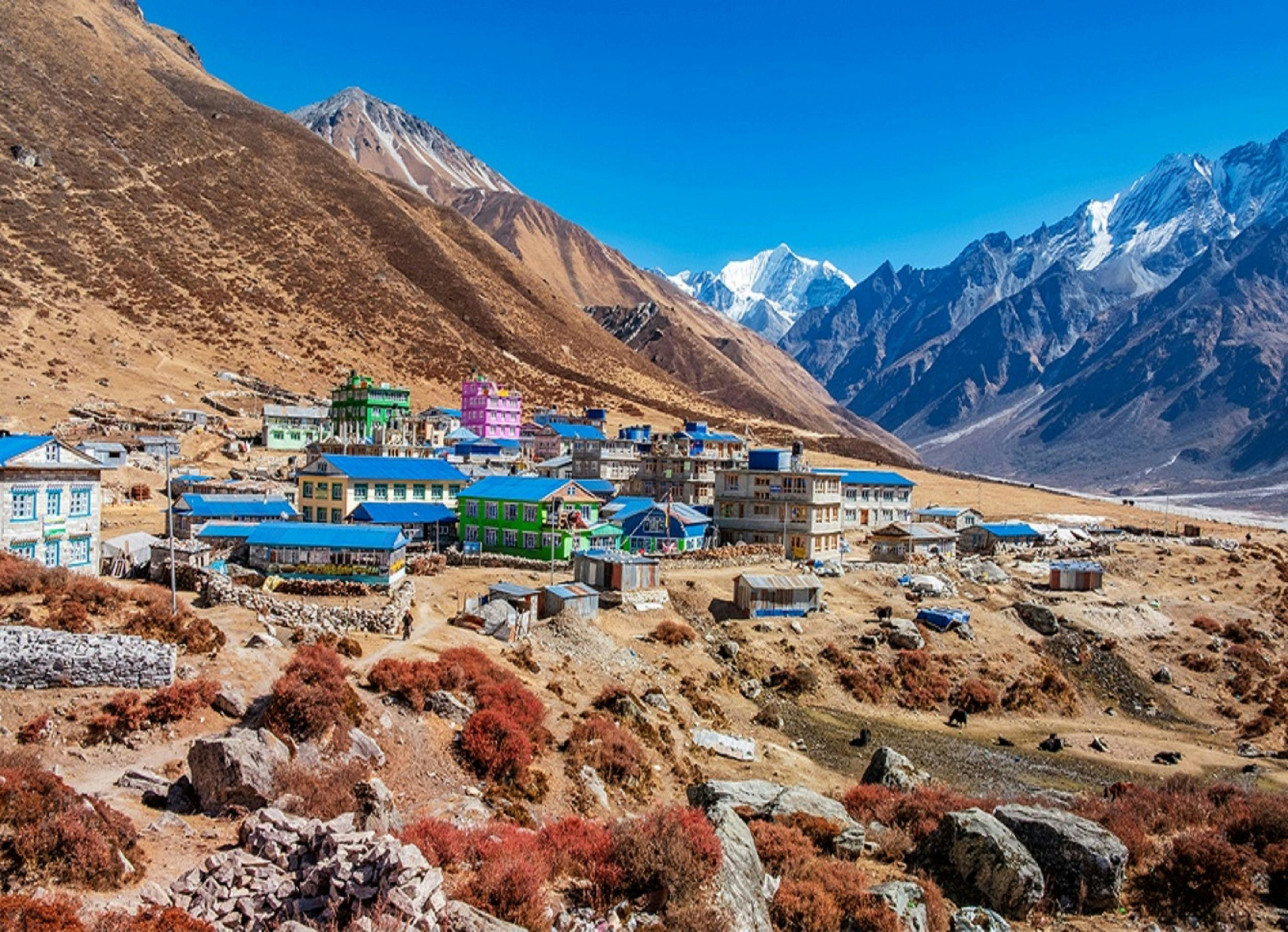
From Syabrubesi the trail enters a forest of oak, rhododendron and bamboo —dense, damp, with the Langtang river running constantly below—, crossing several suspension bridges up to Lama Hotel (2,470 m). The next day, heading to Langtang Village (3,430 m), the forest starts to open up: first clearings, then high-mountain terrain, with the first glaciers appearing at the head of the valley.
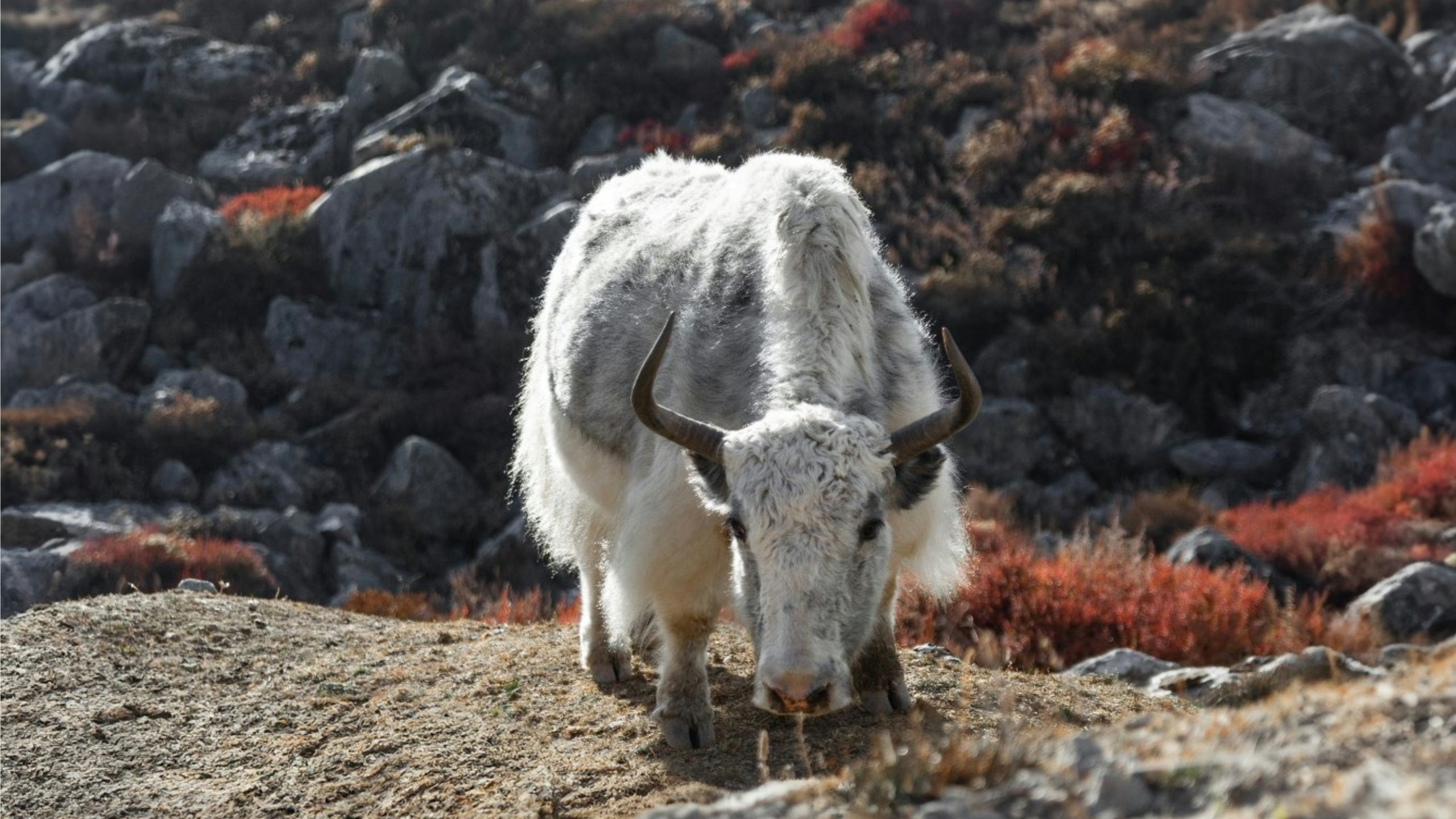
After an acclimatization day, the trail crosses open plains with yak pastures up to Kyanjin Gompa (3,750 m), the last village in the valley. There’s a centuries-old monastery there, and — a detail that surprises almost everyone — a small Swiss-style cheese factory, set up here decades ago as part of a cooperation project, still making yak cheese by hand with the same methods as always. After days of dal bhat and tea, trying that freshly made cheese, with Langtang Lirung in the background, is one of those small luxuries you remember.
From Kyanjin Gompa there are several ways to go higher. The shortest is Kyanjin Ri, a steep but quick viewpoint climb (3-4 hours round trip) with two heights: a first one at around 4,300 meters and, continuing along the ridge, the true summit at 4,773. The one Thin Air operates is more ambitious: Tsergo Ri, at 5,150 meters, a long, rocky summit day with strong winds in the final stretch, rewarded with a 360-degree view of the whole Langtang massif.
Those who’d rather not climb further can continue east along the valley to Langshisha Kharka: a much flatter walk, through glacial moraines, with yaks grazing freely and, on clear days, Shishapangma appearing across the border, already in Tibet. It’s also where you’re most likely to spot a golden eagle circling the valley hunting — one of the largest raptors in the Himalaya, and one of the trek’s more unexpected sights.
Langtang is also the valley of the 2015 earthquake: an avalanche triggered by the quake swept through the village and killed over 300 people, many of them the village’s own residents. Most of the rebuilding was done within the first year, the monastery at Kyanjin Gompa was rebuilt by 2018, and today the valley lives, to a large extent, off trekking — every expedition that passes through directly supports the communities that rebuilt it, stone by stone.