
Elbrus is the highest mountain in Europe: 5,642 meters of extinct volcano between dark rock and snow, deep in the Caucasus, on the blurred border between Europe and Asia. It’s one of the Seven Summits, the list of the highest peak on each continent, and for many climbers it’s the entry point into that list: a mountain that demands respect.
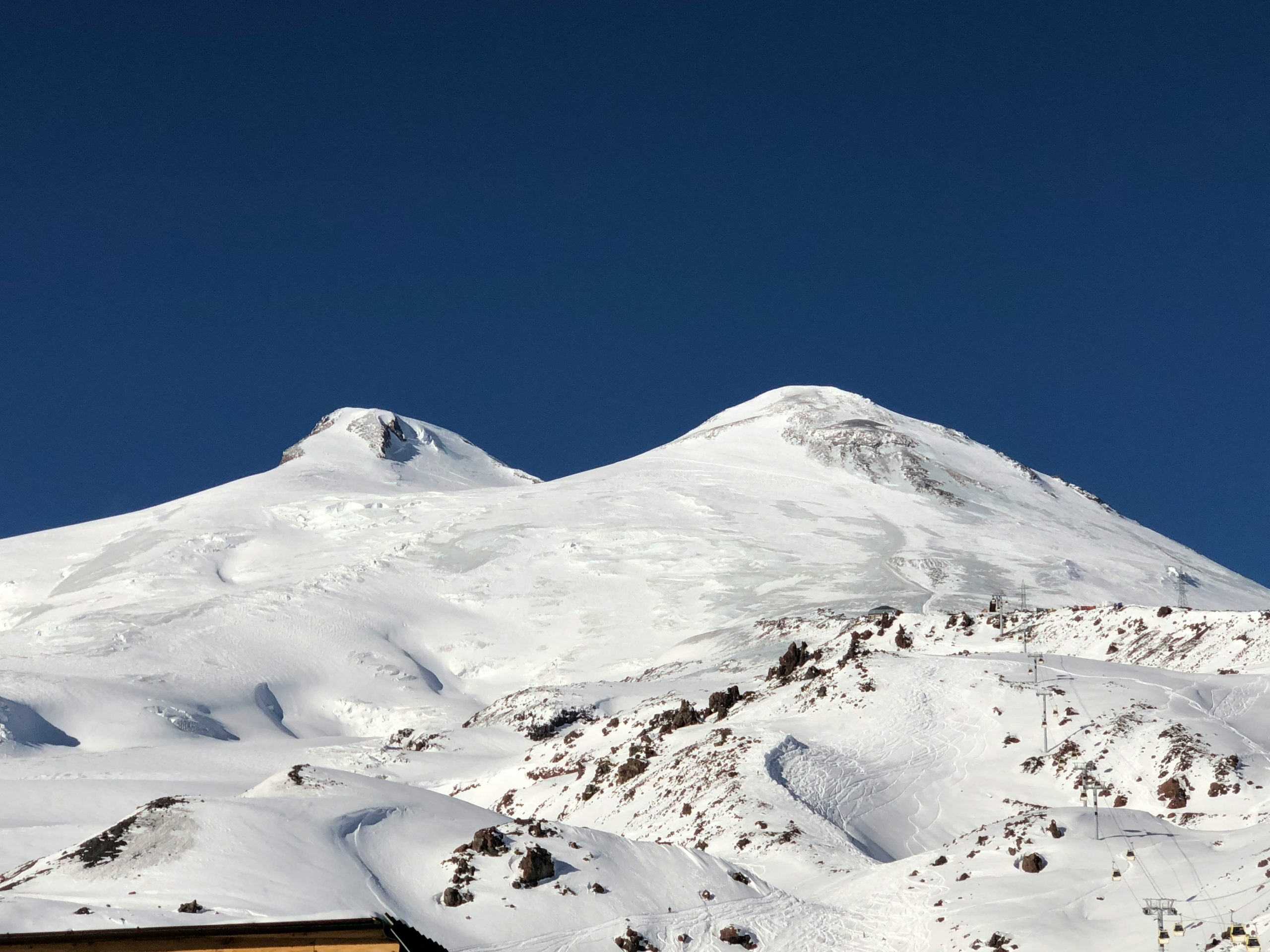
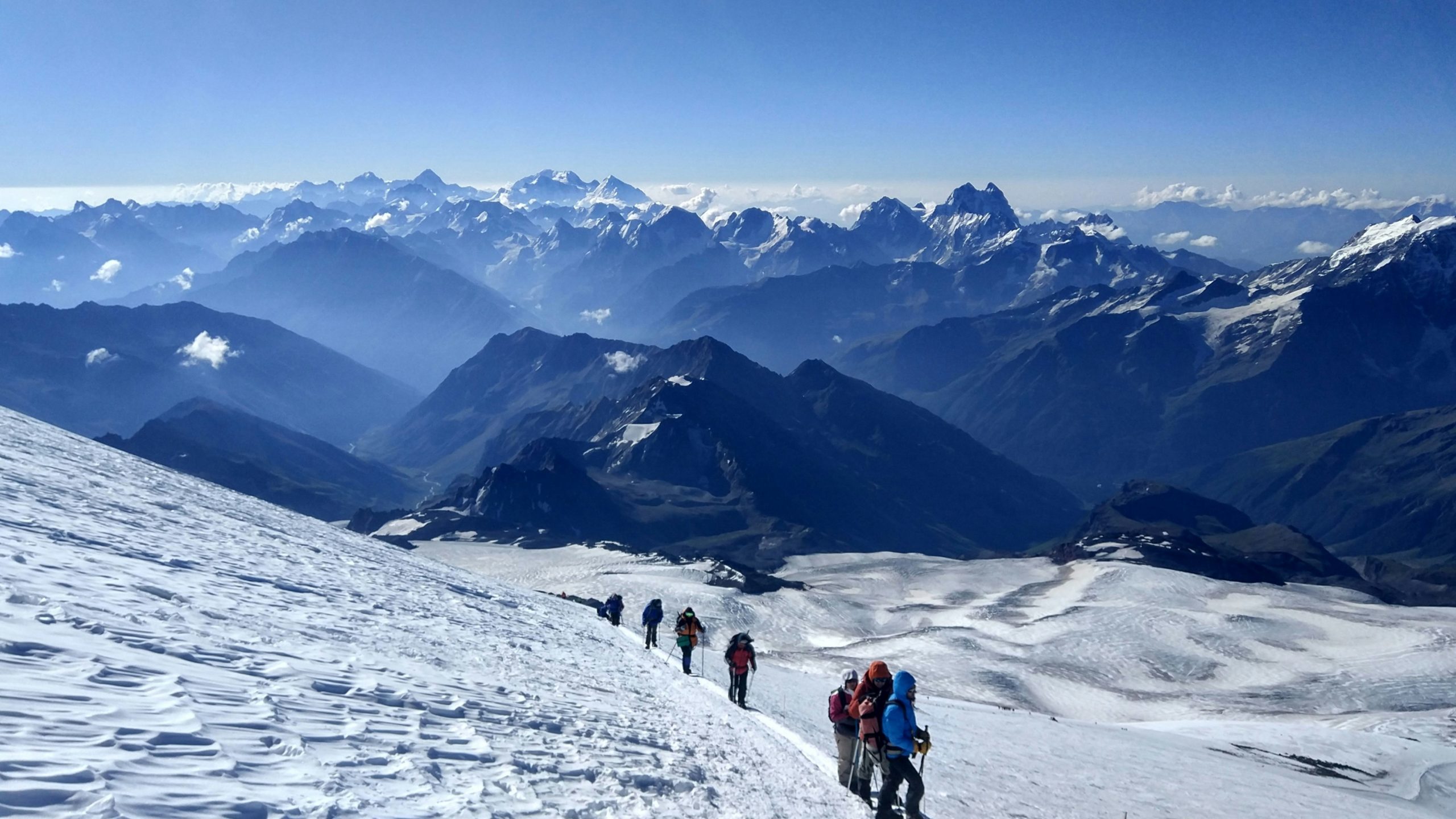
There are several ways to climb Elbrus, but the one Thin Air operates is the south face, the classic and technically most accessible route: it doesn’t require previous high-altitude experience, though it does require good physical shape and respect for the altitude. We climb with a local mountain guide, in small groups, leaving enough time to acclimatize — no rushing a 5,642m summit.
The expedition starts by landing in Mineralnye Vody, the North Caucasus’ regional airport, and from there it’s about a three-hour drive across the Baksan valley to Terskol, the village at the foot of the mountain. Terskol is a popular winter ski resort, with hotels and restaurants, and serves as the base during the first days of acclimatization.
Before heading up to the huts, there are two acclimatization hikes: one to Cheget Peak (3,460 m), taking 4 to 5 hours, and another to Terskol Peak and the astronomical observatory (3,090 m), crossing a forest up to a waterfall. After that, a cable car and chairlift take you up to the huts at 3,800 meters, where the landscape changes completely: volcanic rock and permanent snow from here on.
That’s where crampons go on for the first time, with an acclimatization hike up to Priyut Eleven hut (4,100 m) and, the next day, up to Pastukhov Rocks (4,800 m), where snow and ice technique is trained and, for anyone who needs it, self-arrest with an ice axe.
Summit day starts before dawn, around 2am: a snowcat takes the group up to 4,800 meters, where the final push begins — about 6 hours to the top, with fixed rope sections on the most exposed stretches. The descent is faster: back down to the huts and, from there, the cable car down to Terskol to celebrate. An extra day is also built into the itinerary in case the weather doesn’t cooperate on the planned summit day.
See Elbrus