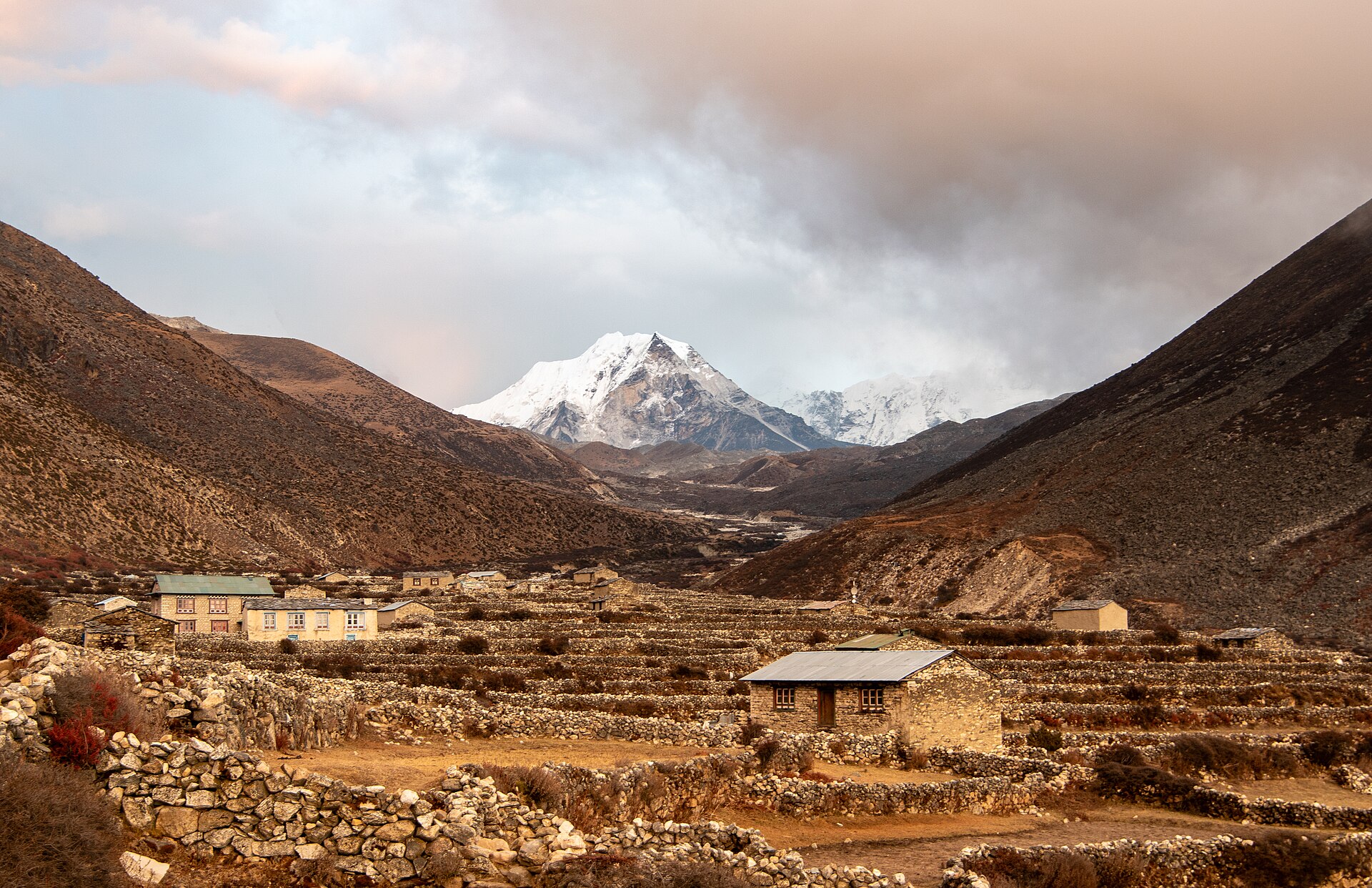
Island Peak (Imja Tse) seen from Dingboche, Khumbu, Nepal

Island Peak
Expedition

From $2,795 · Next departure 7–23 April 2027. Nepal’s most popular trekking peak — up the Everest valley to Chhukung, then an alpine start, a glacier crossing and a fixed-rope headwall to a 6,189m summit facing the south face of Lhotse.

Led by a local guide licensed in Nepal ·

Next departure
7 – 23 Apr 2027
Duration
17 days
Summit altitude
6,189 m
Difficulty
Very strenuous5/6
Above 6,000 m, with glacier travel and technical gear
Guide
Government-licensed guide and climbing Sherpa
The Route

From Kathmandu to the summit of Island Peak

The classic Everest trail through Namche and Dingboche, then east up the Imja Valley to Chhukung, High Camp and a 6,189m summit — two acclimatization days and a spare day for weather built in.

0 m2,000 m4,000 m6,000 m Kathmandu1,400 mNamche Bazaar3,440 mDingboche4,410 mHigh Camp5,600 mIsland Peak6,189 mLukla2,860 mKathmandu1,400 m Day 1Day 10Day 17
Trekking day
High Camp — about 5,600m
Summit of Island Peak — the objective
Day by Day

The full itinerary

Grouped by phase — tap any stage to open it. Want to stand at Everest Base Camp too? See the Lobuche East expedition →

DAY 1 Kathmandu
Arrival in Kathmandu

Welcome to Nepal. We pick you up at the airport and take you to the hotel. Time to rest, wander around Thamel or pick up any last-minute gear before the welcome dinner.

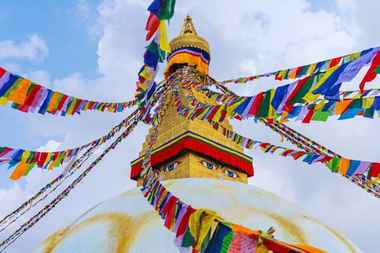
Boudhanath Stupa, Kathmandu
DAYS 2–4 Into the Khumbu
2,610 – 3,440 m
Day 2 · Lukla (2,860 m) → Phakding (2,610 m)

A short mountain flight to Lukla, then an easy first walk down the Dudh Koshi valley to Phakding, past prayer wheels and mani stones.

Day 3 · Namche Bazaar (3,440 m)

We enter Sagarmatha National Park and cross the high suspension bridges over the Dudh Koshi before the long climb to Namche, the Sherpa capital. On a clear day, the first view of Everest.

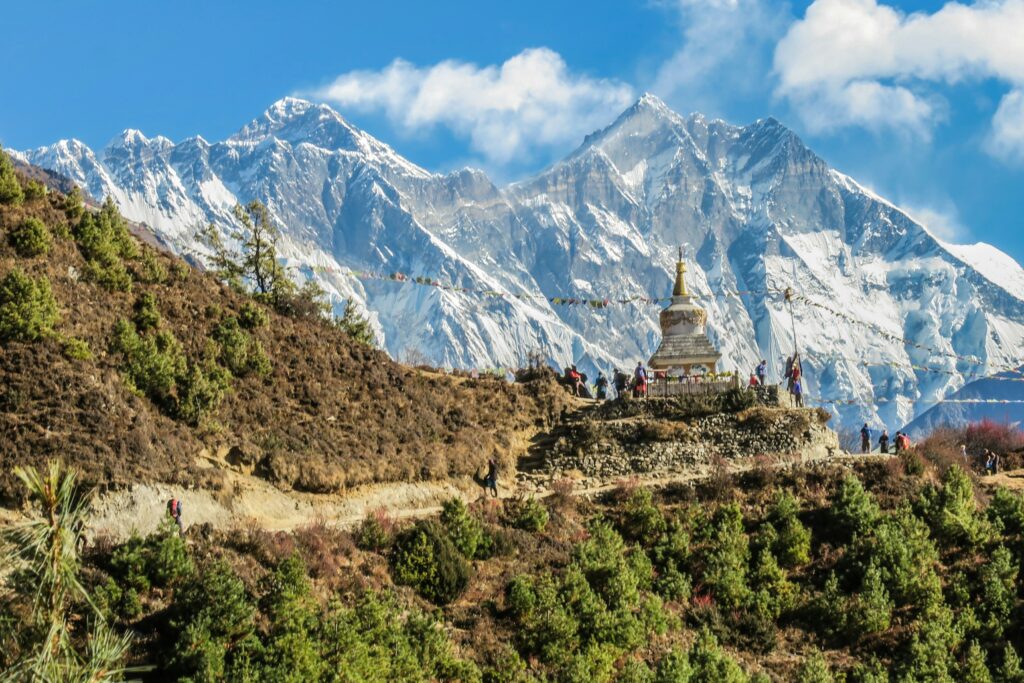
Stupa above Namche Bazaar with Everest and Lhotse behind
Day 4 · Namche Bazaar

Acclimatization day. We hike up towards the Everest View Hotel for views of Everest, Lhotse and Ama Dablam, and come back down to sleep in Namche.

DAYS 5–7 Tengboche & Dingboche
3,820 – 4,410 m
Day 5 · Deboche (3,820 m)

Along the valley and up through rhododendron forest to Tengboche Monastery, the most important in the Khumbu, then a short descent to Deboche for the night.

Days 6–7 · Dingboche (4,410 m)

Past Pangboche and into the Imja Valley, with Ama Dablam towering above. Two nights in Dingboche, with an acclimatization hike on the second day — and Island Peak in full view.

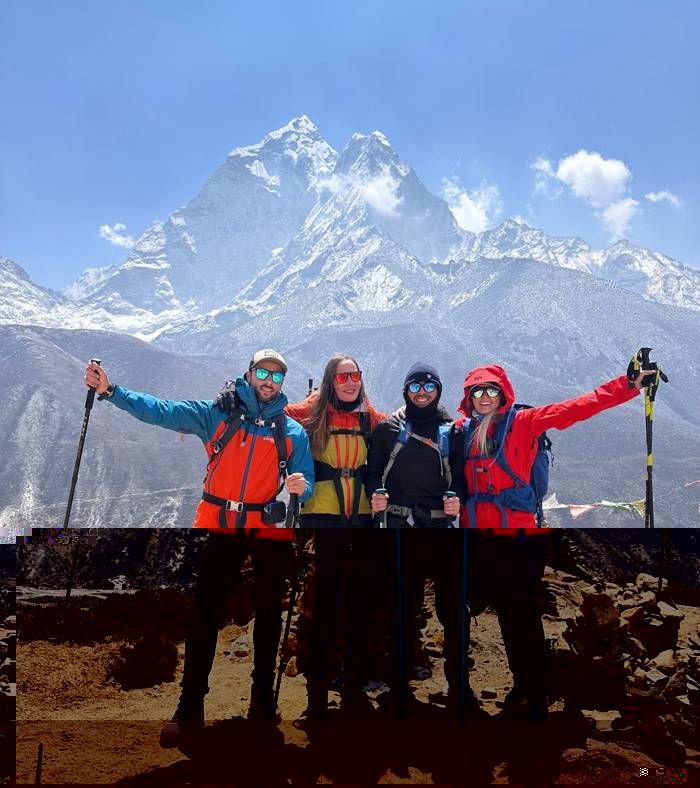
Ama Dablam
DAYS 8–11 Chhukung, High Camp & Summit
4,730 – 6,189 m
Day 8 · Chhukung (4,730 m)

A short day up the Imja Valley to Chhukung, surrounded by Lhotse, Nuptse and Ama Dablam. Our climbing guide checks your gear and runs through the ropework: crampons, harness, jumar and descender.

Day 9 · High Camp (about 5,600 m)

Past Island Peak Base Camp and up a steep, rocky trail to High Camp. Early dinner and early to bed, in a tent.

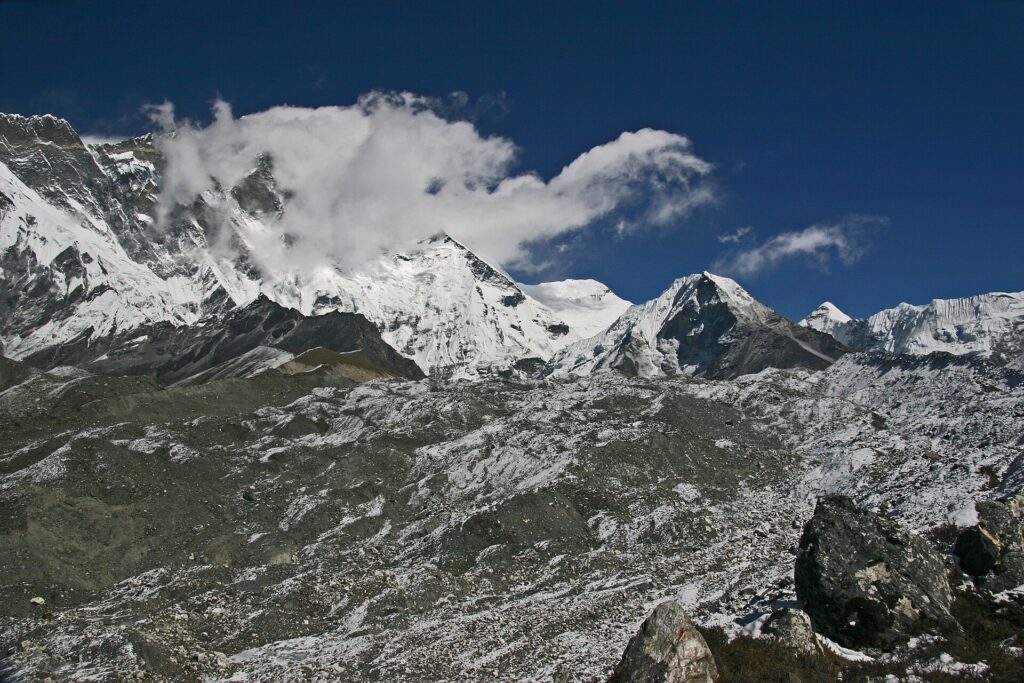
Trail from Chhukung towards Island Peak Base Camp with Nuptse behind
Day 10 · Summit (6,189 m) → Chhukung

We set off in the dark. Rocky gullies lead to the glacier, where we rope up and cross to the foot of the headwall. Fixed ropes and the jumar take us up the steep snow slope to the summit ridge and the top, facing the south face of Lhotse. Then the long way back down to Chhukung.

Day 11 · Spare day

Kept in reserve in case bad weather delays the summit push. If we don’t need it, we start the descent early.

DAYS 12–17 Descent & Kathmandu
3,860 → 1,400 m
Days 12–14 · Tengboche, Namche & Lukla

Three days back down the valley, sleeping in Tengboche, Namche and Lukla. No more altitude to fight, just tired legs and the mountains behind you.

Days 15–17 · Kathmandu

Flight back to Kathmandu. On day 16 we visit the Kathmandu Valley’s UNESCO sites with a local guide. On day 17, transfer to the airport.

The Fine Print

What’s included

INCLUDED

  • Airport transfers — pick-up and drop-off
  • Domestic flights (Lukla or Ramechhap, depending on seasonal restrictions)
  • 3 nights B&B in a double room in Kathmandu
  • Welcome dinner
  • Guided sightseeing tour of the Kathmandu Valley
  • Government-licensed English-speaking guide and a licensed climbing Sherpa for the summit
  • All trekking and climbing permits — Island Peak climbing permit, Sagarmatha National Park and local municipality
  • Porters — luggage up to 15kg per person during the trek
  • Food & lodging — 3 meals a day on the trek; teahouses, and tents at High Camp
  • Group climbing equipment and fixed ropes
  • Medical kit
  • Summit certificate
  • Complete pre-trip guidance, including the recommended gear list

NOT INCLUDED

  • International flight
  • Nepal entry visa — USD 50 (30-day visa)
  • Personal equipment — clothing, sleeping bag, personal climbing gear
  • Bottled water
  • Meals in Kathmandu
  • Tips for the team and summit bonus for the climbing Sherpa
  • Travel insurance covering climbing and helicopter evacuation
  • Personal expenses — Wi-Fi, hot showers, toiletries, battery charging, laundry
  • Extra nights, in case of early arrival or late departure
  • Any other service or activity not listed under “Included”
Gear

What to pack for Island Peak

We climb Island Peak in spring (April), before the monsoon. On the trek up the Khumbu, days are usually clear and pleasant, around 5–18 °C in the lower valleys. Above 4,000 m nights drop below freezing, and at Chhukung and High Camp they can reach −10 °C to −15 °C. Summit day starts in the dark and is the coldest part of the trip, especially with the wind on the summit ridge. You sleep in teahouses on the trek, in a tent at High Camp, and in a hotel in Kathmandu before and after.

Teahouses on the trek, tent at High CampPorters carry up to 15 kgDouble boots and climbing gear needed
See the full gear list

Clothing

  • 2–3 quick-dry T-shirts, short and long sleeve Merino or synthetic, never cotton
  • Thermal base layers, top and bottom
  • Fleece or light insulated jacket
  • Windproof softshell jacket
  • Warm hooded down jacket For High Camp and summit day
  • Waterproof shell jacket and over-trousers
  • Trekking trousers: one light pair + one warm pair
  • An extra thermal set for sleeping

Footwear

  • Double mountaineering boots, crampon-compatible For the climb
  • Waterproof trekking boots, broken in For the trek
  • Light and thick trekking socks
  • Crocs or trainers for the teahouses
  • Gaiters Optional

Climbing gear

  • Crampons that fit your double boots
  • Climbing harness
  • Helmet
  • Jumar (ascender)
  • Descender
  • Locking carabiners

Head & hands

  • Sun cap, warm hat and balaclava or buff
  • Glacier sunglasses, category 4, plus a spare pair
  • Light gloves + warm gloves
  • Warm mittens for summit day

Gear

  • Sleeping bag, comfort rating about −15 °C Can be rented in Kathmandu; let us know in advance
  • Trekking poles
  • Head torch and spare batteries
  • Daypack, 30–35 L
  • Soft duffel bag for the porters Up to 15 kg
  • 2 × 1 L water bottles with insulated covers and a small thermos Water freezes on summit day

Health & personal

  • Sunscreen SPF 50+ and lip balm
  • Your usual medication, plus ibuprofen and an anti-diarrhoeal And whatever your doctor recommends
  • Plasters and antiseptic
  • Toiletries, wet wipes and toilet paper
  • Microfibre towel
  • Glasses or contact lenses and eye drops, if you use them

Documents

  • Passport
  • Nepal entry visa USD 50 (30-day visa)
  • Travel insurance covering climbing up to 6,200 m and helicopter evacuation
  • Cash for tips and teahouse extras Wi-Fi, hot showers and charging are paid

Good to have

  • Power bank or solar charger
  • Electrolytes and your favourite snacks
  • Hand and toe warmers for summit day
  • Camera

Our advice

  1. Dress in three layers: a base layer that wicks away sweat, a mid layer that keeps you warm, and an outer shell against wind and snow. Add and remove layers as you go.
  2. Try your boots before the trip, with thick socks and with the crampons on, so you know they fit.
  3. Practise with your jumar and descender before the trip if you have never used them.
  4. Merino wool is a great choice for socks and thermals: warm, quick to dry and it doesn’t smell.
  5. Leave clean clothes at the hotel in Kathmandu for when you come back.

We carry a satellite phone and a medical kit. Questions about your gear? Message us on WhatsApp.

Reviews

What our travelers say

5.0★★★★★on Google
V
Voytek Getler
★★★★★ Google

An outstanding experience with Thin Air Trips! Isa and the team brought so much care, enthusiasm and professionalism to the whole adventure. Their thoughtful planning, clear communication and attention to detail made everything feel smooth and well organised, allowing me to relax and enjoy the experience.

What stood out most was the personal approach. Isa was approachable, helpful and always happy to answer questions. You could really feel her passion for the mountains and her commitment to making the trip special.

A fantastic team that I would happily recommend to anyone looking for a memorable trekking or mountain adventure. Thank you, Isa and Thin Air Trips—I would love to join you again!

D
Diana Padilla
★★★★★ Google

I’ve now travelled with Thin Air Trips twice — to Torres del Paine and Kyrgyzstan — and both trips were absolutely incredible. Two very different destinations, but equally unforgettable adventures!

One of the best things about travelling with them is that they take care of everything. From planning the itinerary to organising accommodation, transport and all the logistics along the way, they make the whole experience feel easy. There’s so much that goes into organising trips like these, and having it all managed means you can relax, enjoy the adventure and focus on the places you’ve come to explore.

Torres del Paine was spectacular, and Kyrgyzstan was another amazing experience, with breathtaking mountains and landscapes that will stay with me for a long time. Both trips gave me so many special moments and memories that I’ll always treasure.

For me, the real value of Thin Air Trips is being able to experience these extraordinary destinations without the stress of coordinating everything myself. You get all the excitement of an adventure, with the reassurance that the details are taken care of.

The fact that I booked a second trip after my first probably says it all! I would happily travel with them again and highly recommend them to anyone looking for a well-organised, memorable adventure. An easy five stars!

F
Fernando O
★★★★★ Google

Fuimos con ellos al Ararat y todo perfecto, organización de 10, muy buena comunicación antes y durante el viaje, y muy buenos guías. Repetiremos!

S
Sinji W
★★★★★ Google

I had a fantastic experience travelling to Russia to summit Mt Elbrus. Isa has been really communicative and helpful. I had a lot of hestitations about travelling to the region, but all went smooth and the entire trip was amazing. The team on ground were also just as professional and helpful, really helping to take off the logitical pressure and allowing me to focus on the summit.

E
ELENA A.A.
★★★★★ Google

Espectacular!!la ruta , la organización , la gente…repetiré sin duda!

A
Alicia Marquez
★★★★★ Google

Viaje top y equipo mejor aún!

April 2027

Island Peak Expedition — reserve your spot

APR 7 – 23, 2027

Second date: 12 – 28 April 2027.

See all dates in the calendar →

A licensed guide and climbing Sherpa, 17 days from Kathmandu to the summit of Island Peak and back. Want to see Everest Base Camp on the way? See the Lobuche East expedition. Higher but less technical? See Mera Peak. Never used crampons or an ice axe? Learn the basics first on our 4-day mountaineering course in Kyrgyzstan.

FromEARLY BIRD · UNTIL 15 DEC
$2,795/ person
From 16 Dec 2026: $2,895 / person
Guide, climbing Sherpa, permits, teahouses, domestic flights and the Island Peak climb included
Reserve now →

Bring a friend: $50 off for them, $50 for you

We’ll send you the full gear list and group details there
Reserve now

Start your booking

Leave your details and we’ll confirm dates, availability and next steps.

Prefer to talk it through? Book your free 20-min consultation →

More dates

Other upcoming departures

10 – 14 Mar
Khumai Danda Trek · Eid
View trip →
10 – 16 Mar
Mardi Himal Trek · Eid
View trip →
10 – 19 Mar
Annapurna Base Camp Trek · Eid
View trip →
See all dates in the calendar →
What You Should Know

Frequently asked questions

What climbing experience do I need for Island Peak?

You don’t need prior Himalayan summits, but Island Peak does call for basic mountaineering skills: walking in crampons on a glacier and moving on a fixed line with a jumar and descender up a steep snow slope. Our climbing guide reviews the techniques with you in Chhukung before the climb. If you’re new to this, tell us when you book and we’ll help you prepare.

How do I book?

Save your spot for free with the button on this page — you don’t pay anything yet. Once the departure is confirmed, you secure your place with a non-refundable 10% deposit. When the balance is due depends on each trip, and we send you the exact conditions together with the itinerary. You can pay in euros, dirhams or US dollars, depending on the destination. You can pay by card (Visa, Mastercard, Apple Pay, Google Pay), bank transfer or PayPal on request.

What does summit day involve?

A start in the dark from High Camp, rocky gullies up to the glacier, then roped up across it to the foot of the headwall. The final section climbs a steep snow and ice slope on fixed ropes to a narrow summit ridge at 6,189m. Most of the day is the descent, all the way back to Chhukung.

Island Peak, Lobuche East or Mera Peak?

Island Peak and Lobuche East are similar in altitude and difficulty, both with fixed-rope sections. Island Peak has the more classic glacier-and-headwall climb; Lobuche East lets you visit Everest Base Camp on the way. Mera Peak is higher (6,476m) but less technical. We compare all three in detail in our guide Lobuche East vs Island Peak vs Mera Peak.

Why April?

Spring is pre-monsoon season in the Khumbu, with stable weather, long days and good snow conditions on the glacier and headwall.

Is there a risk of altitude sickness?

Yes — the route goes above 5,000m and peaks at 6,189m. The itinerary builds in acclimatization days in Namche and Dingboche and a spare day for the summit, and you climb with a licensed guide and climbing Sherpa trained to manage altitude.

What’s included in the price?

Guide and climbing Sherpa, all trekking and climbing permits, domestic flights, teahouse accommodation and meals on the trek, tents at High Camp, group climbing gear and fixed ropes. International flights, the Nepal visa and personal gear aren’t included — see the full breakdown above.

Is there anything in it if I bring a friend?

Yes. If a friend books a trip from $1,000 on your recommendation, they get $50 off when they book, and you get $50 once they’ve paid (off your next trip, or back to you if you’ve already travelled). They just need to mention your name when booking. New bookings only, once per person, not combinable, valid for 60 days.

Newsletter

Don't miss a thing

New departures, offers and mountain tips. Sign up and get $50 off your first trip from $1,000.

New bookings only, once per person, not combinable, valid for 60 days while you're still subscribed. Unsubscribe anytime.