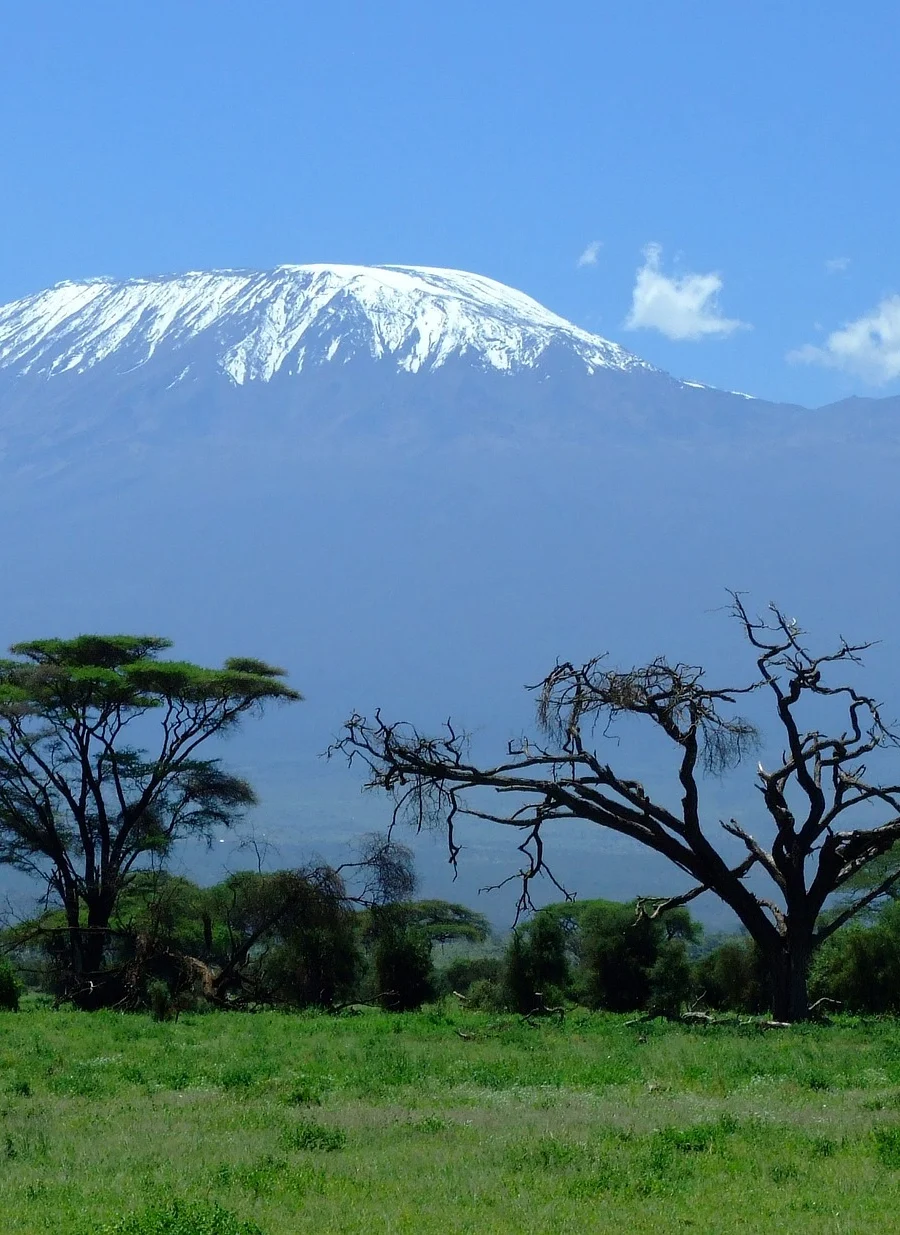

Mount Kilimanjaro's snow-capped summit above the African savanna

Climb Kilimanjaro
by the Lemosho Route

Summit Africa’s highest peak at 5,895m on the five-ecosystem Lemosho route — proper acclimatization built in, and sunrise above the clouds from the crater rim. Two group departures: New Year on the summit, or March.

Next departures
26 Dec – 3 Jan · 6–14 Mar 2027
Duration
9 days
Summit altitude
5,895 m
Physical difficulty
Challenging3/6
Long days or high altitude, no technical climbing
Group
Licensed guide, assistant guides & full support team
The Route

The Lemosho Route — five ecosystems to the summit

From dense rainforest to arctic summit in nine days — Lemosho is the classic approach for good acclimatization, with gradual altitude gain built into every stage.

0m 2,000m 4,000m 6,000m Arusha1,400mMti Mkubwa Camp2,850mShira II Camp3,850mBarranco Camp3,950mKaranga Camp4,000mBarafu Camp4,673mUhuru Peak5,895mMweka Camp3,060mMoshi900m Day 1Day 7Day 9
Camp change
Uhuru Peak (5,895m) — the objective
Day by Day

The full itinerary

Grouped by phase — tap any stage to open it.

DAYS 1–2 Arusha to the rainforest
Day 1 · Arrival in Arusha

Landing at Kilimanjaro International Airport and transfer to your hotel in Arusha (1.5 hours by road). Before dinner, a briefing and equipment check in preparation for tomorrow’s extraordinary expedition.

Day 2 · Arusha — Lemosho Gate (2,100m) & Mti Mkubwa Camp (2,850m)

9km, 750m elevation gained. After breakfast we head to Londorosi Gate for registration, then on to Lemosho Gate. The trail ascends through montane forest, where we may encounter black-and-white colobus monkeys and other wildlife.

DAYS 3–4 Shira Plateau & Barranco
3,850 – 3,950 m
Day 3 · Mti Mkubwa Camp (2,850m) & Shira II Camp (3,850m)

16km, 1,000m elevation gained. We climb the Shira ridge to reach the plateau, leaving the rainforest behind for savannah, high grass and volcanic terrain.

Day 4 · Shira II Camp & Barranco Camp (3,950m)

8km, about 100m net elevation gain — an ideal acclimatization day. We cross the East ridge past Lava Tower and Arrow Glacier before descending to Barranco.

DAYS 5–6 Karanga to Barafu Camp
4,000 – 4,673 m
Day 5 · Barranco Camp & Karanga Camp (4,000m)

5km, 50m elevation gained. We climb the Barranco Wall, about 257 m high: a steep path with no technical difficulty, using our hands here and there, before we pass beneath the Heim and Kersten glaciers, and climb steeply into Karanga valley.

Day 6 · Karanga Camp & Barafu Camp (4,673m)

4km, 673m elevation gained, across desolate scree slopes with no vegetation. On arrival we complete the South Circuit, with magnificent summit views, then rest and have an early dinner before the summit push.

DAY 7 Summit — Uhuru Peak
4,673 → 5,895 m
Day 7 · Barafu Camp, Uhuru Peak (5,895m) & Mweka Camp (3,060m)

4.5km + 11km. Around midnight we start the summit push, between the Rebmann and Ratzel glaciers, northwest towards Stella Point on the crater rim — where you’ll witness one of the most beautiful sunrises you’ll ever see, before reaching the highest point on the African continent. We descend to Barafu for lunch, then continue down to Mweka Camp.

DAYS 8–9 Descent to Moshi
3,060 → 900 m
Day 8 · Mweka Camp & Mweka Gate (1,640m) — Moshi

10km descent to Mweka Gate to receive your summit certificate, then transfer to your hotel in Moshi to shower and relax after a once-in-a-lifetime adventure — and celebrate your summit back on solid ground.

Day 9 · Departure

Transfer to the airport for your onward flight, trip complete.

Gear

What to pack for Kilimanjaro

Both our departures (26 December – 3 January and 6–14 March) fall in Kilimanjaro’s short dry season. Days are usually warm and sunny at the foot of the mountain (around 28 °C in Arusha), although the rainforest can still be wet and misty. Above 4,000 m the sun is strong during the day, but nights drop below freezing. Summit night is the coldest part of the trip: typically −10 °C to −15 °C at Uhuru Peak, and colder with the wind. You sleep in tents on the mountain and in a hotel before and after the climb.

Tent & mattress includedPorters carry up to 13 kgNo mountaineering boots needed

Clothing

  • 2 sets of thermal base layers One light, one warm. Merino or synthetic, never cotton
  • 2–3 quick-dry T-shirts, short and long sleeve
  • Fleece or light insulated jacket
  • Trekking trousers
  • Waterproof jacket and over-trousers
  • Warm hooded down jacket For the high camps and summit night

Footwear

  • Waterproof trekking boots, broken in
  • 3–4 pairs of trekking socks + 1 warm pair for sleeping
  • Trainers or Crocs for camp
  • Gaiters Optional, useful on the summit scree

Head & hands

  • Sun cap and warm hat
  • Buff
  • Sunglasses, category 3 or 4
  • 3 pairs of gloves Thin liners, warm gloves and mittens for summit night

Gear

  • Sleeping bag, comfort rating about −15 °C
  • Trekking poles
  • Head torch and spare batteries
  • Daypack, 30–35 L, with rain cover
  • Soft duffel bag for the porters Up to 13 kg
  • 2 × 1 L water bottles with insulated covers Hydration bladders freeze on summit night

Health & personal

  • Sunscreen SPF 50+ and lip balm
  • Your usual medication, plus ibuprofen and an anti-diarrhoeal And whatever your doctor recommends
  • Plasters and antiseptic
  • Toiletries, wet wipes and toilet paper
  • Microfibre towel

Documents

  • Passport
  • Tanzania visa
  • Mandatory Tanzania travel insurance
  • Mountain insurance covering trekking up to 6,000 m
  • Cash for tips

Good to have

  • Power bank
  • Hand warmers for summit night
  • Electrolytes and your favourite snacks
  • Camera

Our advice

  1. Dress in three layers: a base layer that wicks away sweat, a mid layer that keeps you warm, and an outer shell against wind and rain. Add and remove layers as you go.
  2. Try your boots before the trip with the thick socks you’ll wear on the mountain.
  3. Merino wool is a great choice for socks and thermals: warm, quick to dry and it doesn’t smell.
  4. Leave clean clothes at the hotel for when you come down.

We carry a medical kit with Diamox and an oximeter. Plastic bags are banned in Tanzania, so pack in fabric or dry bags. Questions about your gear? Message us on WhatsApp.

The Fine Print

What’s included

INCLUDED

  • Airport-hotel-airport transfers, plus transfers to and from the national park
  • 2 nights hotel in Moshi/Arusha, bed & breakfast, double room
  • All Kilimanjaro National Park fees (conservation, camping, crew, vehicle & rescue fees)
  • Medical kit, including Diamox and an oximeter
  • 3 meals a day plus tea & coffee, boiled water daily, tent & mattress (2 per tent)
  • Uhuru Peak summit certificate
  • Porters, kitchen staff, licensed English-speaking guides
  • Complete gear list and WhatsApp group
  • Up to 13kg luggage carried per member during the trek

NOT INCLUDED

  • International flights to and from Kilimanjaro International Airport
  • Tanzania entry visa fee ($50 for most nationalities)
  • Tanzania government mandatory travel insurance ($44 per person)
  • Lunch & dinner in Arusha/Moshi
  • Mountain insurance, covering high-altitude trekking up to 6,000m
  • Personal equipment — clothing, sleeping bag
  • Tips for the staff
  • Personal expenses — phone, internet, toiletries, laundry, alcoholic beverages
  • Extra nights beyond the itinerary, or any item not listed under “Included”
  • Customized training & nutrition plan (optional extra, on request)
Reviews

What our travelers say

5.0★★★★★on Google
V
Voytek Getler
★★★★★ Google

An outstanding experience with Thin Air Trips! Isa and the team brought so much care, enthusiasm and professionalism to the whole adventure. Their thoughtful planning, clear communication and attention to detail made everything feel smooth and well organised, allowing me to relax and enjoy the experience.

What stood out most was the personal approach. Isa was approachable, helpful and always happy to answer questions. You could really feel her passion for the mountains and her commitment to making the trip special.

A fantastic team that I would happily recommend to anyone looking for a memorable trekking or mountain adventure. Thank you, Isa and Thin Air Trips—I would love to join you again!

D
Diana Padilla
★★★★★ Google

I’ve now travelled with Thin Air Trips twice — to Torres del Paine and Kyrgyzstan — and both trips were absolutely incredible. Two very different destinations, but equally unforgettable adventures!

One of the best things about travelling with them is that they take care of everything. From planning the itinerary to organising accommodation, transport and all the logistics along the way, they make the whole experience feel easy. There’s so much that goes into organising trips like these, and having it all managed means you can relax, enjoy the adventure and focus on the places you’ve come to explore.

Torres del Paine was spectacular, and Kyrgyzstan was another amazing experience, with breathtaking mountains and landscapes that will stay with me for a long time. Both trips gave me so many special moments and memories that I’ll always treasure.

For me, the real value of Thin Air Trips is being able to experience these extraordinary destinations without the stress of coordinating everything myself. You get all the excitement of an adventure, with the reassurance that the details are taken care of.

The fact that I booked a second trip after my first probably says it all! I would happily travel with them again and highly recommend them to anyone looking for a well-organised, memorable adventure. An easy five stars!

F
Fernando O
★★★★★ Google

Fuimos con ellos al Ararat y todo perfecto, organización de 10, muy buena comunicación antes y durante el viaje, y muy buenos guías. Repetiremos!

S
Sinji W
★★★★★ Google

I had a fantastic experience travelling to Russia to summit Mt Elbrus. Isa has been really communicative and helpful. I had a lot of hestitations about travelling to the region, but all went smooth and the entire trip was amazing. The team on ground were also just as professional and helpful, really helping to take off the logitical pressure and allowing me to focus on the summit.

E
ELENA A.A.
★★★★★ Google

Espectacular!!la ruta , la organización , la gente…repetiré sin duda!

A
Alicia Marquez
★★★★★ Google

Viaje top y equipo mejor aún!

Two departures, one objective

Kilimanjaro — reserve your spot

DEC 26 – JAN 3 · MAR 6–14, 2027
See all dates in the calendar →

9 days via the Lemosho route: New Year on the summit, or a quieter March climb. Licensed guide, assistant guides and full support team, five ecosystems, proper acclimatization built in.

From
$2,595/ person
Guide, permits, group gear & transport included
Book Now →

Bring a friend: $100 credit each towards your next trip

We’ll send the full gear list & group details there
Book Now

Start your booking

Leave your details and we’ll follow up to confirm dates, availability and next steps.

Prefer to talk it through? Book your free 20-min consultation →

Keep reading

How to Climb Kilimanjaro: Routes, Days and When to Go →Best time to climb Kilimanjaro, season by season →Mount Kenya vs Kilimanjaro: Which Should You Climb? →Elbrus vs Kilimanjaro: Which Should You Climb First? →
Good to know

Frequently asked questions

How fit do I need to be for Kilimanjaro?

No technical climbing skills are required — it’s an accessible hike for most of the route — but altitude is a real challenge, especially on summit day. We recommend regular cardio training in the weeks before the trip, and the Lemosho route’s gradual pace gives your body the best chance to acclimatize.

How do I book?

Save your spot for free with the button on this page — you don’t pay anything yet. Once the departure is confirmed, you secure your place with a non-refundable 10% deposit. When the balance is due depends on each trip, and we send you the exact conditions together with the itinerary. You can pay in euros, dirhams or US dollars, depending on the destination.

When is the best time to climb?

December to March is one of Kilimanjaro’s two dry seasons, usually with clear skies and good summit conditions. Our New Year departure puts summit day on January 1st; the March departure falls just before the long rains start in April.

Do I need technical climbing experience?

No. Kilimanjaro is a trek, not a technical climb — no ropes or climbing gear are needed on the route itself. What matters most is cardiovascular fitness and a steady pace to help your body adjust to the altitude.

What’s included in the price?

A licensed English-speaking guide, assistant guides, porters and cook, all park fees, 3 meals a day during the trek, camping equipment, 2 hotel nights in Moshi/Arusha and your summit certificate. International flights, the Tanzania entry visa and mountain insurance aren’t included.

Why the Lemosho route?

Lemosho approaches from the quieter west side of the mountain, crossing five distinct ecosystems and giving the body more days and more altitude variation to acclimatize.

Is there anything in it if I bring a friend?

Yes. If someone books a trip on your recommendation, you each get $100 credit towards your next trip with Thin Air ($50 if the trip they book costs under $1,500). The credit isn’t taken off the trip being booked now: it’s used on the following one. They just need to mention your name when booking.