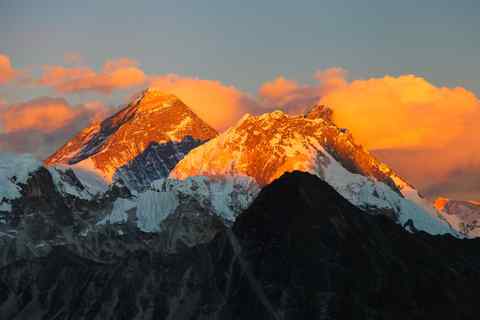
Everest
Base Camp
Trek into the Khumbu with a government-licensed guide, teahouse to teahouse — and on this spring departure, sleep a night at Everest Base Camp itself, something very few treks offer.
Trek into the Khumbu with a government-licensed guide, teahouse to teahouse — and on this spring departure, sleep a night at Everest Base Camp itself, something very few treks offer.
Every stop on the way up — and the fast way back down. No day skips acclimatization; none of it is optional at this altitude.
Grouped by phase — tap any stage to open it. Want every detail first? See the full day-by-day itinerary & gallery →
Your adventure kicks off in Kathmandu. Settle into the hotel, explore Thamel’s vibrant alleys, shop for last-minute gear, or relax before the welcome dinner.
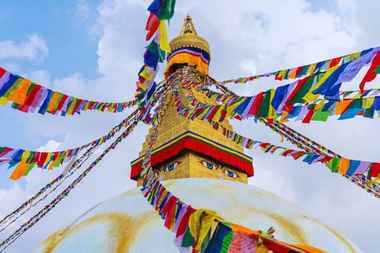
A scenic 30-minute flight from Kathmandu to Lukla, with stunning views of the Khumbu Valley. After tea at a local lodge, we trek to Phakding, passing lush landscapes and charming Nepalese villages.
We trek into Sagarmatha National Park, a UNESCO site — crossing rivers, valleys and the iconic Hillary Bridge. Yaks along the trail, and a glimpse of Everest itself on clear days. Two nights in Namche to acclimatize.
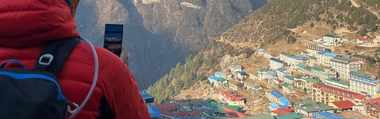
Namche is a historic trading hub known for its Sherpa hospitality. We hike up to the Everest View Hotel, the world’s highest, for a first breathtaking view of Mount Everest.
A gentle trail followed by a 3km ascent through vibrant flora and fauna. We visit Tengboche Monastery, then descend to Dibuche for a peaceful night in the Himalayas.
A six-hour climb with Ama Dablam dominating the horizon — pagodas, prayer walls and painted rocks along the way. Two nights here to acclimatize before pushing higher.
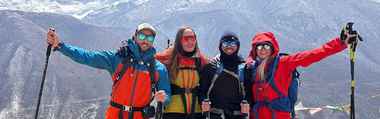
A 2-hour descent before crossing a river, passing a memorial honoring climbers who braved Everest. Following the Khumbu moraine, with Kala Patthar and Lobuche in view.
A 2–3 hour trek offering stunning views of Pumori, Nuptse and Everest. The trail crosses the Khumbu Glacier, weaving through rocky terrain until Gorak Shep — then on to Everest Base Camp itself. Overnight right there, in a tent — something very few treks offer.
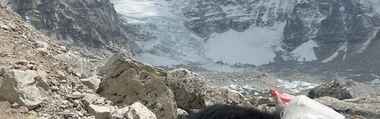
The descent to Namche and Lukla, in three days — no altitude to fight anymore, just tired legs and the mountain behind you.
Flight back to Kathmandu, keeping a spare day for any weather delays or to explore the vibrant city. Transfer to the airport.
Small groups, government-licensed guide, 14 days from Kathmandu to the foot of Everest and back. Want to extend the trip? Ask Isa about adding a few days in Bhutan afterwards. Prefer a technical summit instead of just the trek? See the Lobuche East Expedition — the same trek to Base Camp, plus a real 6,119m summit. Looking for a lower-altitude option instead? See the Annapurna Base Camp Trek.
Leave your details and we’ll follow up to confirm dates, availability and next steps.
No mountaineering experience needed, but you should be comfortable walking 5–7 hours a day, several days in a row. We recommend 2–3 months of cardio and leg-strength training before you depart.
Spring (March–May) and autumn (September–November) are the two trekking seasons, with the clearest skies and driest trails. Thin Air runs guided departures in both — and the spring departure includes an extra night camping at Everest Base Camp itself, something we don’t offer on the autumn departure.
Base Camp sits at 5,364m, so yes — but the itinerary builds in dedicated acclimatization days and is led by a government-licensed guide trained to manage altitude safely.
Guide, all trekking permits, domestic flights, teahouse accommodation and meals on the trail. International flights, the Nepal entry visa and personal gear aren’t included.
Groups are kept small, with an English-speaking, government-licensed guide throughout.