
Annapurna
Base Camp
A 12-day teahouse trek to the foot of the world’s 10th-highest peak — from the lakeside city of Pokhara, through bamboo forests and Gurung villages, to a night sleeping at Annapurna Base Camp itself (4,130m), inside the Annapurna Sanctuary. No technical climbing, no crowds of Everest.
The Sanctuary of the Gods
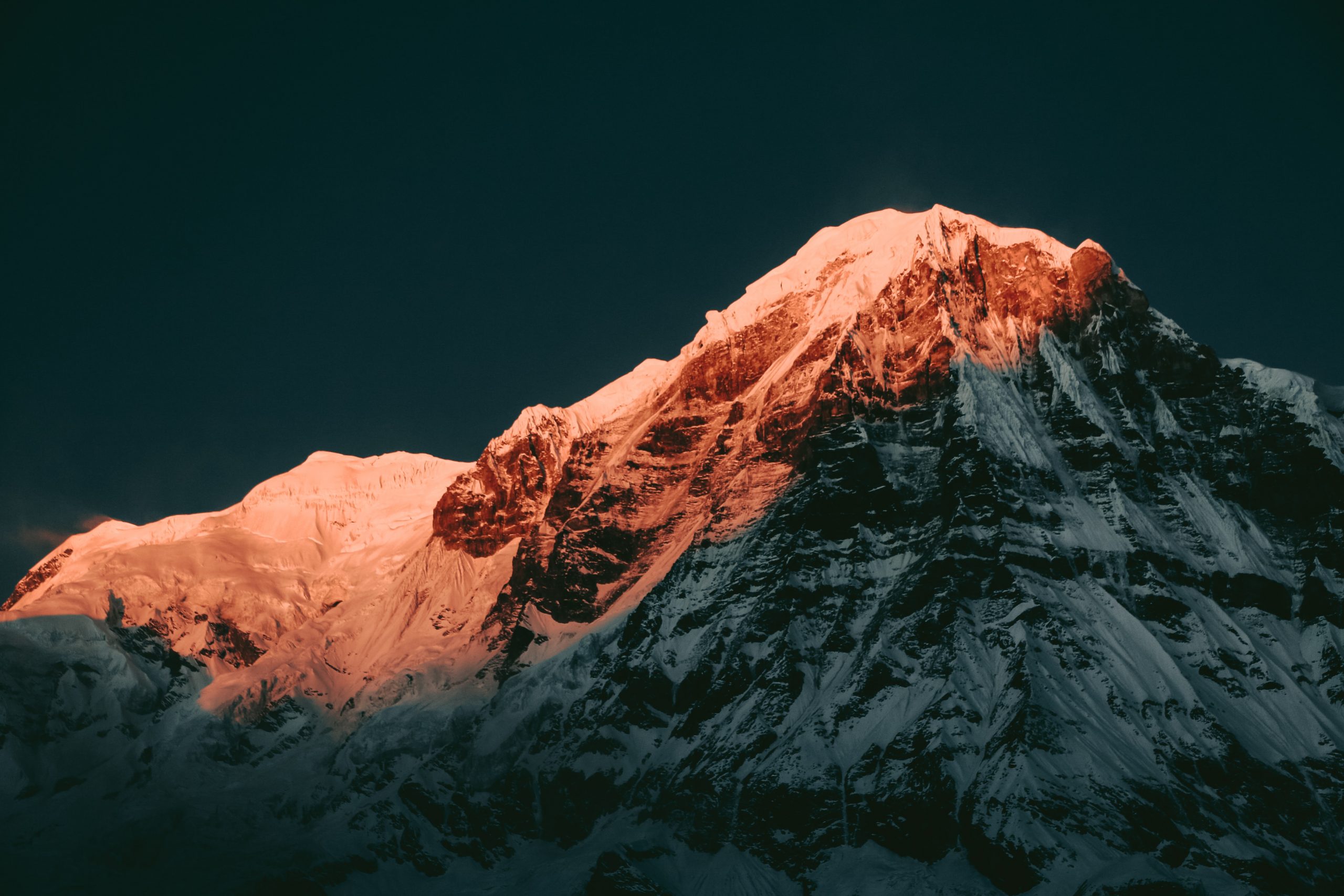
Annapurna (8,091m) is the world’s 10th-highest peak, rising above Western Nepal — and the trek into its Sanctuary is routinely ranked among the most beautiful in the world, crossing from subtropical jungle to glacier in a matter of days.
From Pokhara to Annapurna Base Camp
A there-and-back profile through the Annapurna Conservation Area — climbing from Pokhara’s 823m up to 4,130m at Base Camp, with an optional pre-dawn side trip up to the Poon Hill viewpoint along the way.
The full itinerary
12 days, grouped by phase — tap any stage to open it.
DAYS 1–2
Kathmandu & Transfer to Pokhara
823m
Land in Kathmandu and transfer to the hotel. Spend the afternoon wandering Thamel — picking up any last-minute gear, exploring the neighbourhood, or simply resting — before the welcome dinner.
After breakfast, a scenic private-jeep transfer (5–6h) to Pokhara, Nepal’s second-largest city and the gateway to the Annapurna range — one of the few places on Earth where peaks over 6,000m are visible from just 800m, within a 28km radius. The rest of the day is free to relax and get ready for the trek.
DAYS 3–4
Ghorepani & Poon Hill Sunrise
2,874m → 2,680m
The trek begins, climbing from Hile into the heart of the Annapurna Conservation Area through the village of Tikhedhunga, then up the famous stone staircase to Ulleri — around 3,000 steps carved into the hillside — before continuing through rhododendron and oak forest to Ghorepani, the gateway to Poon Hill.
An early climb to the Poon Hill viewpoint for sunrise over the Annapurna and Dhaulagiri ranges, then an easy acclimatisation day following the Modi River, past large boulders and over the Kimrong River to Chhomrong, continuing on through bamboo, rhododendron and oak forest to Tadapani.
DAYS 5–6
Through the Bamboo Forests to Deurali
2,300m → 3,230m
Stone steps down to the Chomrong Khola, a suspension-bridge crossing, then a climb through thick bamboo up to Kuldi (2,470m) and a long stone staircase down into Sinuwa — a cluster of teahouses tucked into a dramatic gorge.
Up through bamboo forest and a steadily rising trail to Hinku Cave, where the vegetation thins out to reveal the valley, the river below, and sheer rock faces streaked with waterfalls. Several bridges of logs and grass later, you reach Deurali for the night.
DAY 7
Annapurna Base Camp
4,130m
The big day. From Deurali, the trail rises through Bagar and on to Machhapuchhre Base Camp (3,700m), with Machhapuchhre and Annapurna South towering overhead. From there it’s an icy trail into the 360° amphitheatre of Annapurna Base Camp itself — where you sleep for the night, in what trekkers often call the house of the Gods.
DAYS 8–10
Descent to Pokhara & Kathmandu
2,170m → 1,400m
A long descent, retracing the route back down to Chomrong — nearly 2,000m of elevation lost in a single day.
The final stretch of trail down to Naya Pul, then a drive back to Pokhara to mark the end of the trekking section.
Drive from Pokhara back to Kathmandu and transfer to the hotel.
DAYS 11–12
Kathmandu Sightseeing & Departure
1,400m
A full day to explore Kathmandu Valley’s temples and UNESCO World Heritage Sites with a professional guide, and take in the city’s traditions and bustling streets.
A buffer day in case of bad weather, with a guided visit to Durbar Square and the Monkey Temple. Free time to explore Thamel, visit the largest stupa in Asia, or unwind at a local spa before your flight home.
What’s included
INCLUDED
- Airport transfers (pick-up & drop-off)
- 3 nights in Kathmandu + 2 nights in Pokhara, 3* hotels, B&B, double room
- Welcome dinner
- Annapurna Conservation Area permit, TIMS card & conservation entry fee
- 3 meals a day on trek, including tea, coffee & soft drinks, in twin-share teahouse rooms
- 2L of boiled water per day per member
- Medical kit
- Government-licensed English-speaking guide & international team leader
- Guided Kathmandu Valley sightseeing, Monkey Temple & Durbar Square
- Porters (up to 15kg per member during the trek)
- Satellite phone carried by the guide for emergencies
- Full pre-trip consultancy: gear list, training & nutrition guidance, WhatsApp group
NOT INCLUDED
- International flights to & from Kathmandu
- Nepal entry visa (around $30 for 15 days)
- Lunch & dinner in Kathmandu and Pokhara (except the welcome dinner)
- Emergency medical & evacuation costs, if required
- Special filming, camera or drone permits
- Personal equipment: clothing, sleeping bag
- Tips for guides & porters
- Personal expenses: phone, internet on trek, hot showers, laundry, alcoholic drinks
- Anything not listed in “what’s included”
Annapurna Base Camp Trek — reserve your spot
12 days from Kathmandu and back, small groups with a government-licensed guide. A second, smaller window also runs October–November 2026 — ask Isa if that date suits you better. Comparing it with the Everest side? See the Everest Base Camp trek, or the full official itinerary & booking page.
Start your booking
Leave your details and we’ll follow up to confirm dates, availability and next steps.
Frequently Asked Questions
Do I need previous trekking experience?
No. There’s no technical difficulty on this route — it’s a well-marked teahouse trail with lodges at every checkpoint. A reasonable level of fitness helps, since you’re walking for several hours a day, but no climbing skills or equipment are required.
How does this compare to Everest Base Camp?
Both are classic Himalayan teahouse treks, but Annapurna sees far fewer trekkers, starts from the road-accessible city of Pokhara instead of a Lukla flight, and crosses more varied terrain — jungle, bamboo forest and glacier — in a shorter overall trip. See our Annapurna vs. Everest Base Camp guide for the full comparison.
Do you also run this trek in October–November?
Yes — alongside the April–May 2027 departure featured here, we also run a window in October–November 2026. Message Isa on WhatsApp if that date works better for you.
What’s the altitude risk like?
The itinerary is built with acclimatisation days and a gradual ascent profile, and the guide carries a medical kit and a satellite phone for emergencies. Even so, altitude sickness is always a personal risk at elevation — travel insurance covering high-altitude trekking and emergency evacuation is strongly recommended.
What’s included in the price?
Airport transfers, hotels in Kathmandu and Pokhara, the welcome dinner, all permits and fees, three meals a day on trek with tea, coffee and boiled water, a government-licensed guide, porters, and full pre-trip consultancy. International flights, visa, lunches/dinners in Kathmandu and Pokhara, personal gear and personal expenses are not included — see the full list above.
Can this be combined with another trip?
Yes — several clients extend their time in Nepal with the Everest Base Camp trek or the Lobuche East Expedition. Ask Isa about building a longer Nepal itinerary around this trek.
Why is it called “Annapurna Base Camp” if you can’t summit from there?
Unlike Everest Base Camp, Annapurna Base Camp isn’t a staging point for climbing the mountain — it’s a trekkers’ lodge area inside the Annapurna Sanctuary, at the foot of the south face. The name has simply become the common way this trek is known, and that’s the name we use here too.