
Mardi Himal
Trek
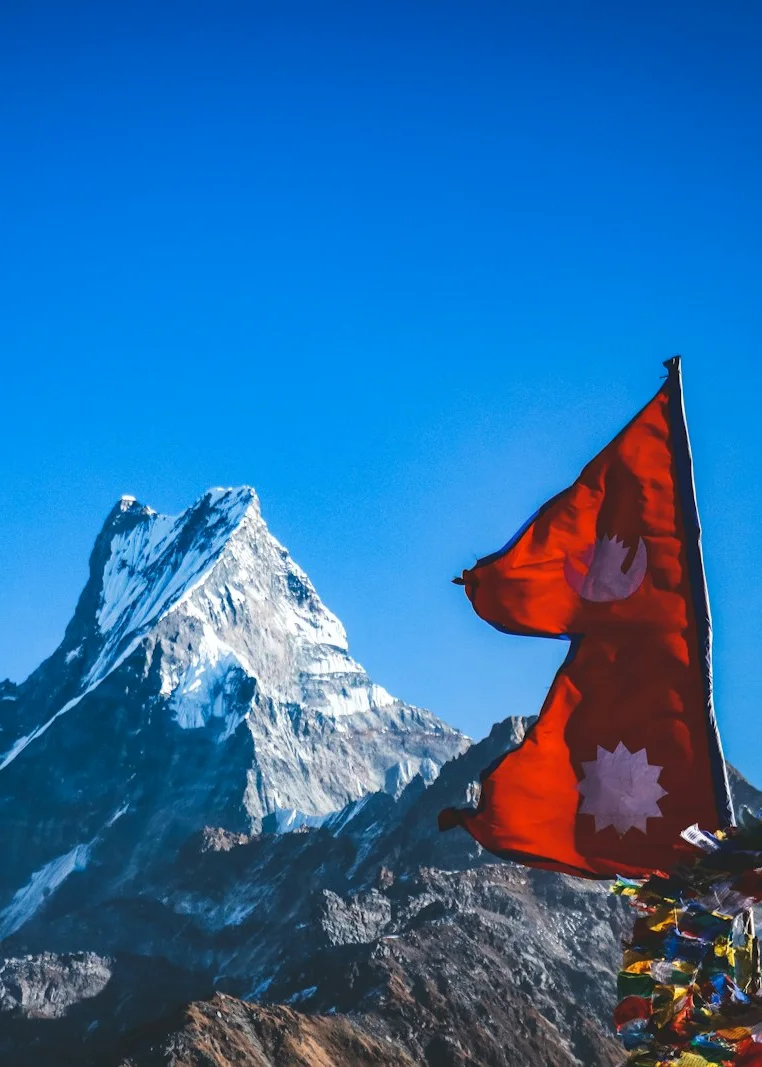
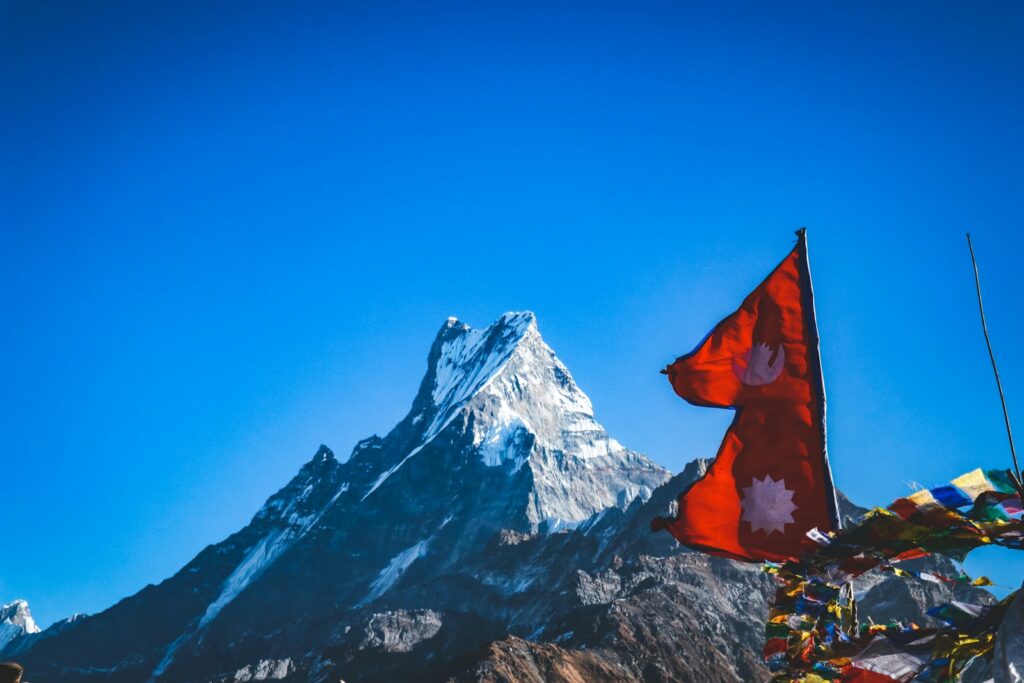
A short trek from Pokhara, from the rhododendron forests to a ridge face to face with Machapuchare.
Led by a local guide licensed in Nepal ·
Every stop of the trek. Two days of forest, two days on the ridge and a sunrise at the viewpoint, starting and finishing in Pokhara.
Grouped by phase — tap any stage to open it.
Airport pick-up and transfer to your hotel by Phewa Lake. Briefing with your guide, gear check and a free afternoon.
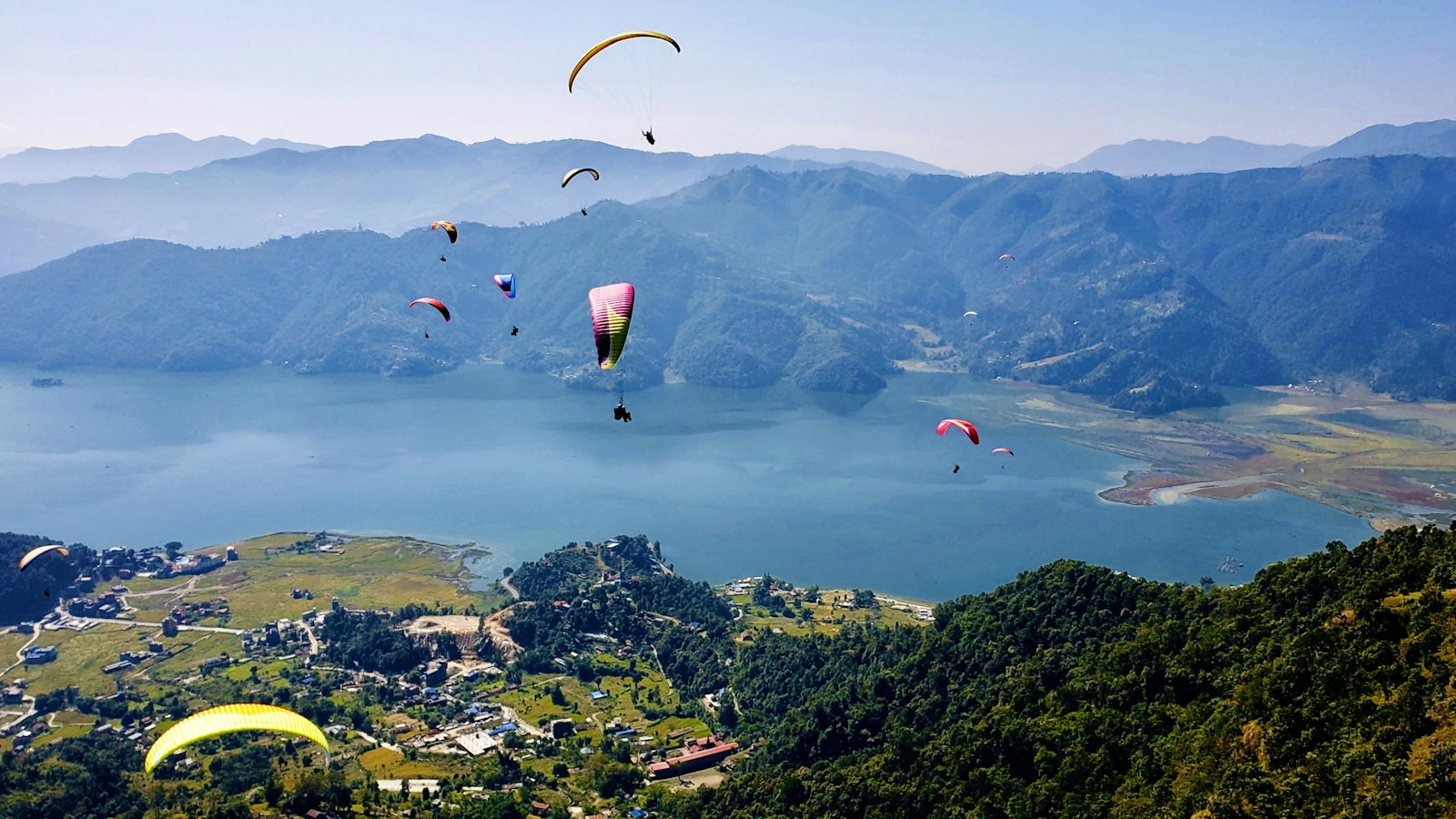
An hour’s drive to Kande, then a gentle first walk through villages and forest. Around 4–5 hours.
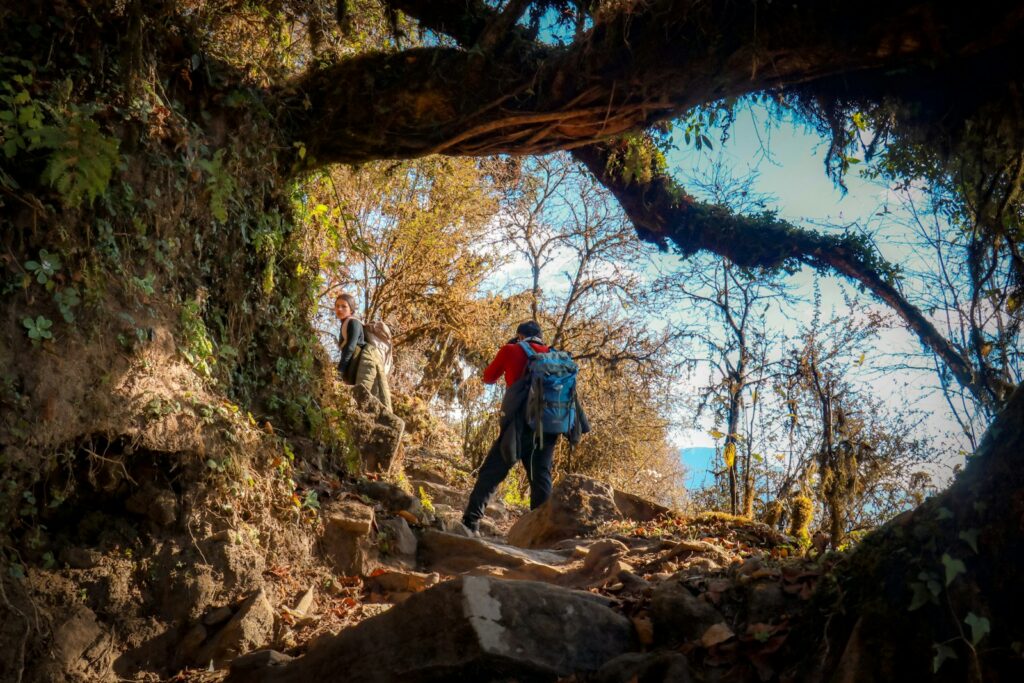
A steady climb through dense rhododendron and oak forest, often in the clouds, up to Low Camp. Around 5–7 hours.
Out of the forest onto an open ridge, with Machapuchare, the sacred “fishtail” mountain, straight ahead. A shorter day of 3–4 hours.
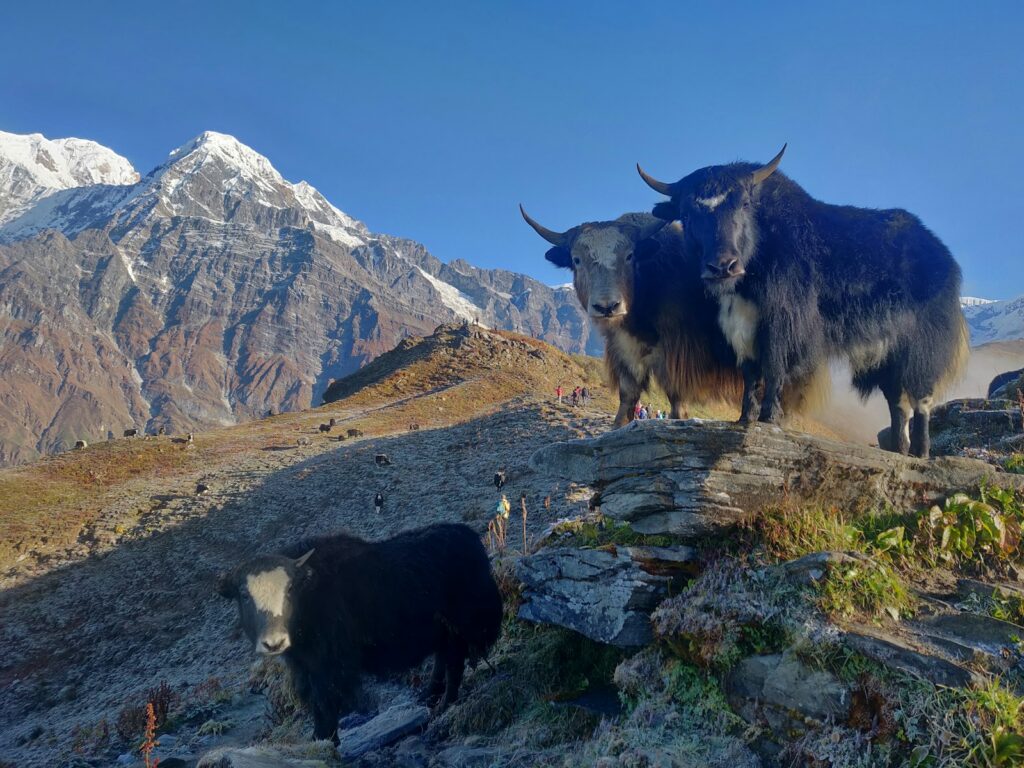
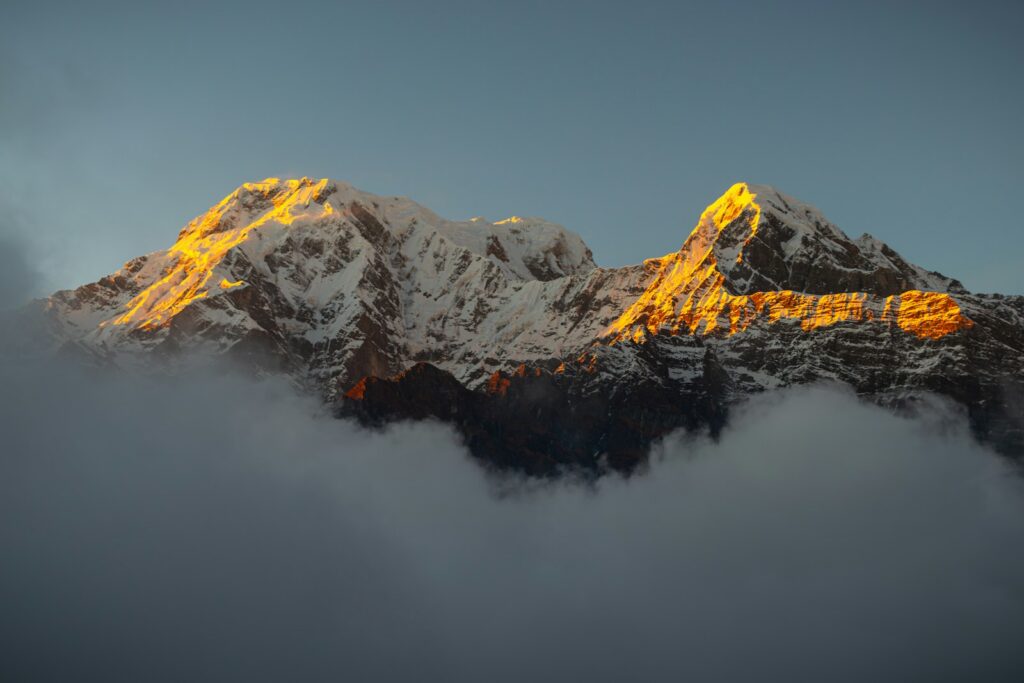
A pre-dawn start to reach the viewpoint for sunrise over Machapuchare, Annapurna South and Hiunchuli, then a long descent back to Low Camp. Around 6–7 hours.
Down through forest and villages to Siding, then a jeep back to Pokhara. Hot shower and dinner by the lake.
Breakfast and transfer to Pokhara airport. Want to stay longer in Pokhara or keep travelling in Nepal? We can arrange it.
We run this trek in two seasons. In spring (March–May) days are mild, mornings are usually clear and the rhododendron forests are in bloom; clouds often build in the afternoon. In autumn (October–early December), after the monsoon, the air is at its clearest and the mountain views are the best of the year, but nights get colder as the season goes on. In both seasons, daytime temperatures in the lower valleys are around 5–18 °C. Above 4,000 m nights drop below freezing, and at High Camp and the viewpoint (3,600–4,200 m) they can reach −10 °C, or −15 °C and colder in late November. You sleep in teahouses (simple mountain lodges) every night of the trek, and in a hotel in Pokhara before and after.
We carry a satellite phone and a medical kit. Questions about your gear? Message us on WhatsApp.
An outstanding experience with Thin Air Trips! Isa and the team brought so much care, enthusiasm and professionalism to the whole adventure. Their thoughtful planning, clear communication and attention to detail made everything feel smooth and well organised, allowing me to relax and enjoy the experience.
What stood out most was the personal approach. Isa was approachable, helpful and always happy to answer questions. You could really feel her passion for the mountains and her commitment to making the trip special.
A fantastic team that I would happily recommend to anyone looking for a memorable trekking or mountain adventure. Thank you, Isa and Thin Air Trips—I would love to join you again!
I’ve now travelled with Thin Air Trips twice — to Torres del Paine and Kyrgyzstan — and both trips were absolutely incredible. Two very different destinations, but equally unforgettable adventures!
One of the best things about travelling with them is that they take care of everything. From planning the itinerary to organising accommodation, transport and all the logistics along the way, they make the whole experience feel easy. There’s so much that goes into organising trips like these, and having it all managed means you can relax, enjoy the adventure and focus on the places you’ve come to explore.
Torres del Paine was spectacular, and Kyrgyzstan was another amazing experience, with breathtaking mountains and landscapes that will stay with me for a long time. Both trips gave me so many special moments and memories that I’ll always treasure.
For me, the real value of Thin Air Trips is being able to experience these extraordinary destinations without the stress of coordinating everything myself. You get all the excitement of an adventure, with the reassurance that the details are taken care of.
The fact that I booked a second trip after my first probably says it all! I would happily travel with them again and highly recommend them to anyone looking for a well-organised, memorable adventure. An easy five stars!
Fuimos con ellos al Ararat y todo perfecto, organización de 10, muy buena comunicación antes y durante el viaje, y muy buenos guías. Repetiremos!
I had a fantastic experience travelling to Russia to summit Mt Elbrus. Isa has been really communicative and helpful. I had a lot of hestitations about travelling to the region, but all went smooth and the entire trip was amazing. The team on ground were also just as professional and helpful, really helping to take off the logitical pressure and allowing me to focus on the summit.
Espectacular!!la ruta , la organización , la gente…repetiré sin duda!
Viaje top y equipo mejor aún!
Government-licensed guide, 7 days from Pokhara, timed with the Eid holidays so you need fewer days off. There are direct flights from the UAE to Pokhara. Other dates on request. Want a longer trek in the same area? See the Annapurna Base Camp Trek. Want to extend the trip? Ask us about adding a few days in Bhutan afterwards.
Bring a friend: $50 off for them, $50 for you
Leave your details and we’ll follow up to confirm dates, availability and next steps.
Prefer to talk it through? Book your free 20-min consultation →
Keep reading
It is a moderate trek: 5 days on foot with steady climbs of 4–7 hours and one long day to the viewpoint and back down. No technical skills are needed; if you hike regularly and have good fitness, you can do it. A few weeks of cardio and leg training before you go will make it much more enjoyable.
Yes. It is short, the altitude stays moderate (the highest night is at around 3,600 m) and it gives you real Himalayan views without the time or effort of the bigger treks.
Yes. It is designed for that: 7 days from Pokhara, with the departure timed around the Eid holidays so you need fewer days off.
No. As it’s a short trek, a porter is optional: $140 per porter for the whole trek, and you can share one between two. Without one, you carry your own pack, around 8–10 kg.
The trip starts and ends in Pokhara. If you arrive in Kathmandu, we can arrange your flight to Pokhara and a hotel in Kathmandu as an extra.
Spring (March–May), when the rhododendron forests are in bloom, and autumn (October–November), when the skies are clearest. In March there can be some snow near the viewpoint; the guide adapts the day to the conditions.
The Annapurna Conservation Area permit. It is included and we arrange it for you.
Save your spot for free with the button on this page — you don’t pay anything yet. Once the departure is confirmed, you secure your place with a non-refundable 10% deposit. When the balance is due depends on each trip, and we send you the exact conditions together with the itinerary. You can pay in euros, dirhams or US dollars, depending on the destination. You can pay by card (Visa, Mastercard, Apple Pay, Google Pay), bank transfer or PayPal on request.
Yes. You can travel solo and join the group. If you would rather do the trek just with your friends or family, we can also run it privately — ask us.
As is normal in Nepal, the standard price doesn’t include a single room, Wi-Fi, charging your batteries, hot showers or drinking water in the teahouses; you pay for them locally as you go.
Yes. If a friend books a trip from $1,000 on your recommendation, they get $50 off when they book, and you get $50 once they’ve paid (off your next trip, or back to you if you’ve already travelled). They just need to mention your name when booking. New bookings only, once per person, not combinable, valid for 60 days.
New departures, offers and mountain tips. Sign up and get $50 off your first trip from $1,000.
Mardi Himal Trek · 10 – 16 Mar 2027 · Eid