
France, Italy & Switzerland
What to know before the Tour du Mont Blanc: getting there, entry, money, phones and health.
Before you go
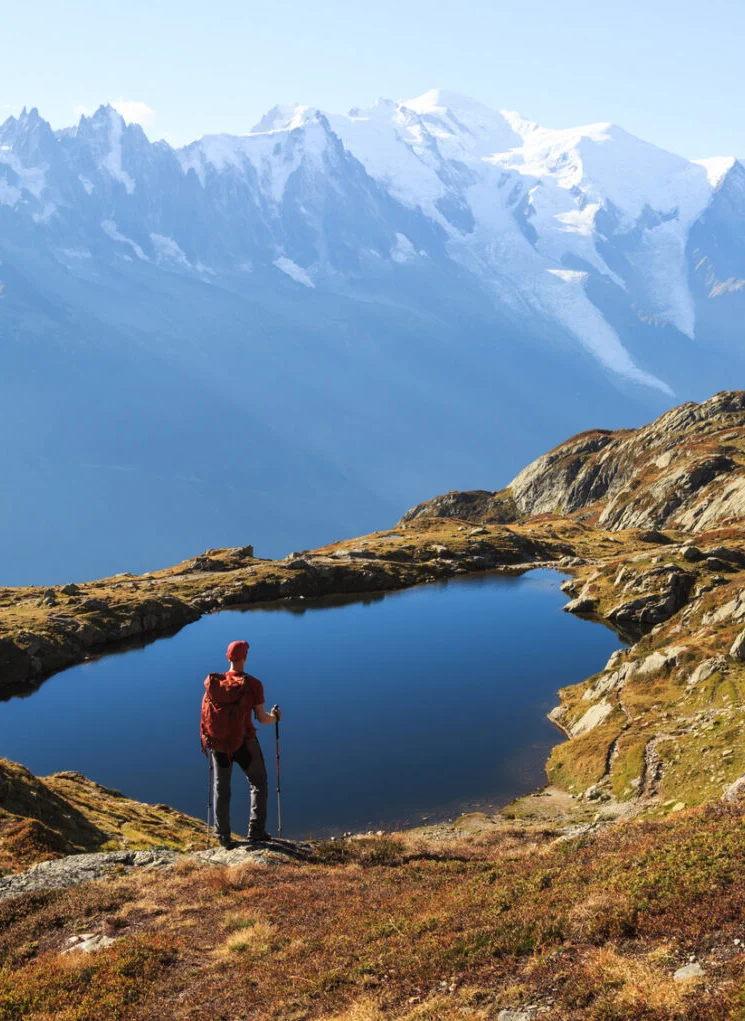
The Tour du Mont Blanc loops all the way around the massif through three countries: from Chamonix (France) to Courmayeur (Italy) and Champex (Switzerland), and back to Chamonix.
| At a glance | |
|---|---|
| Getting there | The easiest airport is Geneva, about an hour by road from Chamonix. We can arrange the transfer if you like. |
| Entry | All three countries are in the Schengen Area. EU citizens just need their passport or ID card. Many other nationalities can enter visa-free for up to 90 days (in any 180) and are registered at the border under the new Entry/Exit System (EES); others need a Schengen visa. The ETIAS travel authorisation for visa-free visitors is expected to start in 2027. Check the requirements for your nationality before you travel. |
| Currency | Euro in France and Italy, Swiss franc in Switzerland. Cards work in most places, but carry some cash for mountain huts and small cafés. |
| Phones | Switzerland isn’t in the EU: if your plan includes EU roaming, check what you’ll be charged there. |
| Weather | Alpine summer: mild days in the valleys and cool on the passes, with frequent afternoon thunderstorms. It can snow on the high passes even in August. |
| Plugs | 230 V. France uses types C and E; Italy C, F and L; Switzerland C and J. Bring a universal adapter. |
The Tour du Mont Blanc
Tour du Mont Blanc
Best time: mid-June to mid-September, when the passes are clear of snow and the huts are open.
Two versions from Chamonix: 7 days in hotels or 9 days hut to hut, 4 to 7.5 hours a day, over passes such as the Col de la Seigne (2,516 m) and the Grand Col Ferret (2,537 m). With a UIMLA-certified guide and your luggage transferred, so you only carry a daypack.
All dates are in the departure calendar.
Health, altitude and insurance
- Altitude: the highest point is the Fenêtre d’Arpette (2,665 m, optional), so altitude isn’t an issue. Still, if you have any questions, just ask us
- Insurance: it’s mandatory. It must cover mountain trekking up to about 2,700 m, as well as helicopter rescue and evacuation and repatriation. EU citizens should also bring their European Health Insurance Card, valid in all three countries. Before departure you’ll sign a waiver
- Vaccines: requirements depend on the country you’re travelling from. Check the latest on your country’s official health website or with a travel health clinic, or ask us
- Physical preparation: you don’t need to be an athlete, but arriving prepared makes it more enjoyable: some stages are up to 19 km with 1,300 m of ascent. We can help you prepare
Got a question?
If you’re thinking about the Tour du Mont Blanc and have questions about the trip or how to prepare, write to us and we’ll reply by email.
See upcoming departures → Book a free 20-min callBring a friend: $100 credit each towards your next trip