
The Manaslu Circuit is a full loop around Manaslu (8,163 m), the eighth-highest mountain in the world. For two weeks you walk from subtropical gorges to Tibetan Buddhist villages and yak pastures, cross the Larkya La at 5,106 m and come down into the Annapurna side of the range. The valleys north of Manaslu were closed to trekkers until the early 1990s, and it still feels like it: far fewer people than on Everest or the Annapurna Circuit, and a real sense of remoteness.
Manaslu Circuit at a glance
- Highest point: Larkya La, 5,106 m
- Length: 16 days from Kathmandu, 10 of them walking
- Accommodation: simple teahouses (family-run lodges) the whole way
- Best time: spring (March to May) and autumn (October and November)
- Difficulty: strenuous: long walking days and a high pass, but no technical climbing
The route
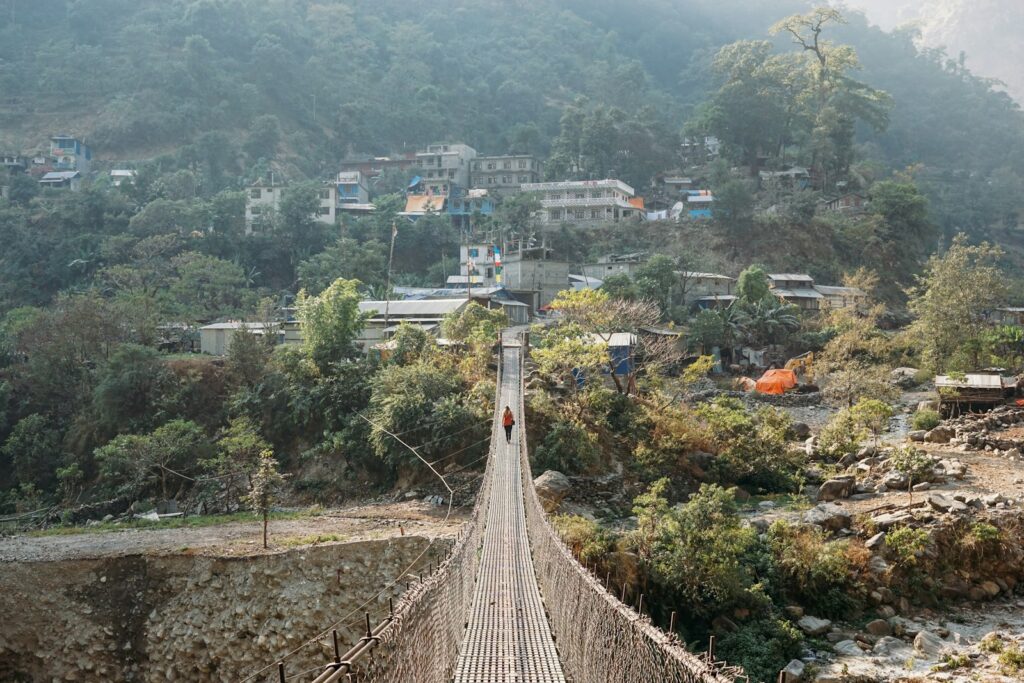
From Kathmandu it is a long day by road (8–9 hours) to Machha Khola, at 870 m. The first days follow the gorge of the Budhi Gandaki river through Jagat and Deng: suspension bridges, waterfalls and terraced fields clinging to the slopes. In Jagat you enter the Manaslu Conservation Area.
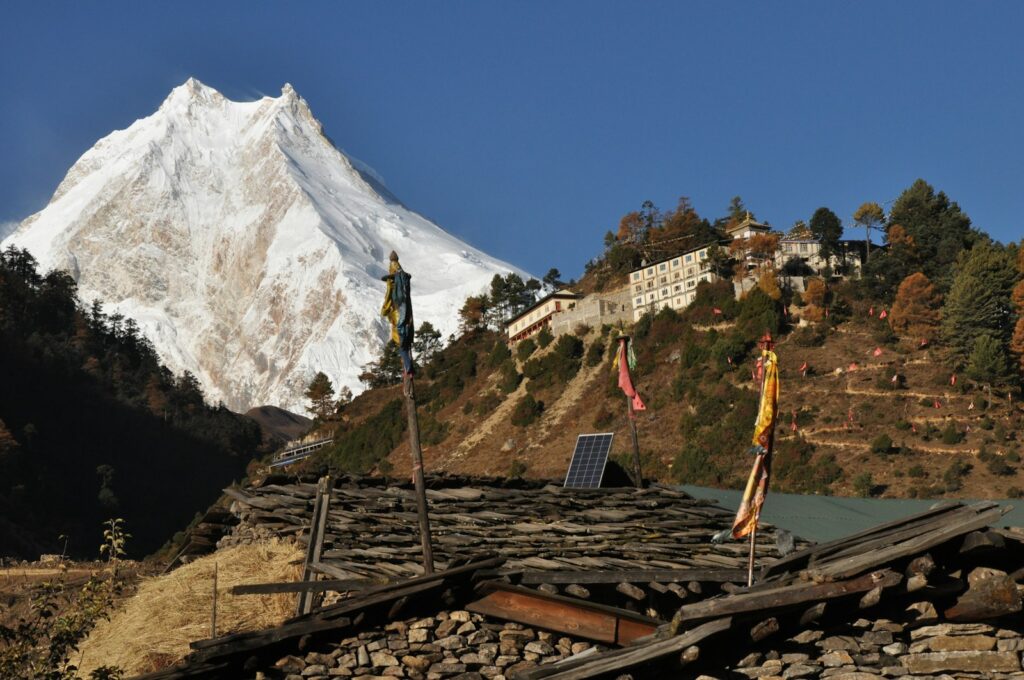
Around Namrung (2,630 m) everything changes. The forest gives way to open valleys, and the villages become Buddhist, with prayer flags, mani walls and strong Tibetan roots. Manaslu appears above Shyala, and the next stop, Samagaun (3,530 m), is the main village of the upper valley, right below the Manaslu glacier.
From there the route climbs slowly to Samdo (3,860 m), one of the last villages before the border with Tibet, and to Dharamsala (4,460 m), at the foot of the pass. After the Larkya La you drop into Bimthang and then through pine and rhododendron forest into the Marsyangdi valley, where the trek ends and a jeep takes you to Pokhara.
The Larkya La day
This is the big day of the trek. You leave Dharamsala well before sunrise, climb steadily for several hours to the pass and then face a long, steep descent to Bimthang. Count on 8 to 10 hours of walking. The reward is one of the best views in Nepal: Himlung, the Annapurna range and a sea of glaciers all around you. In spring there can still be snow on the pass, which is why the guide decides the start time on the day.
Acclimatisation
The Manaslu Circuit gains height gradually, which helps a lot. Our itinerary includes a full acclimatisation day in Samagaun, with a hike above the village and back down to sleep, and short stages from Samdo onwards so you arrive at the pass rested. Even so, altitude affects everyone differently, and being fit does not protect you. Before you go, read our guide to altitude sickness and acclimatisation.
Permits and guide
Manaslu is a restricted area. You need a special permit arranged through a registered agency, plus the conservation area permits, and you have to trek with a licensed guide. Permits are checked along the way, starting in Jagat. On our trip all permits are included and arranged for you, and porters carry your main bag.
Is the Manaslu Circuit for you?
You don’t need climbing experience, but you do need good fitness and some experience of multi-day hiking. Most days are long, with a lot of up and down, and the pass day is the longest of all. If you have done a trek like Everest Base Camp or the Annapurna Base Camp and want something wilder, Manaslu is the natural next step. To prepare, have a look at how to train for a mountain trip.
Manaslu Circuit: quick answers
How long is the Manaslu Circuit?
Our trip takes 16 days from Kathmandu to Kathmandu, with 10 days of walking, an acclimatisation day in Samagaun and a spare day at the end in case of delays.
How high is the Manaslu Circuit?
The highest point is the Larkya La pass, at 5,106 m. The highest night is in Dharamsala, at 4,460 m.
Can I do the Manaslu Circuit on my own?
No. It is a restricted area, so you need a special permit arranged through an agency and a licensed guide.
When is the best time to go?
Spring (March to May) and autumn (October and November), when the weather is most stable and the pass is usually open. In winter the Larkya La is often closed by snow, and in summer the monsoon brings rain and landslides.
Keep reading
Don't miss a thing
New departures, offers and mountain tips. Sign up and get $50 off your first trip from $1,000.