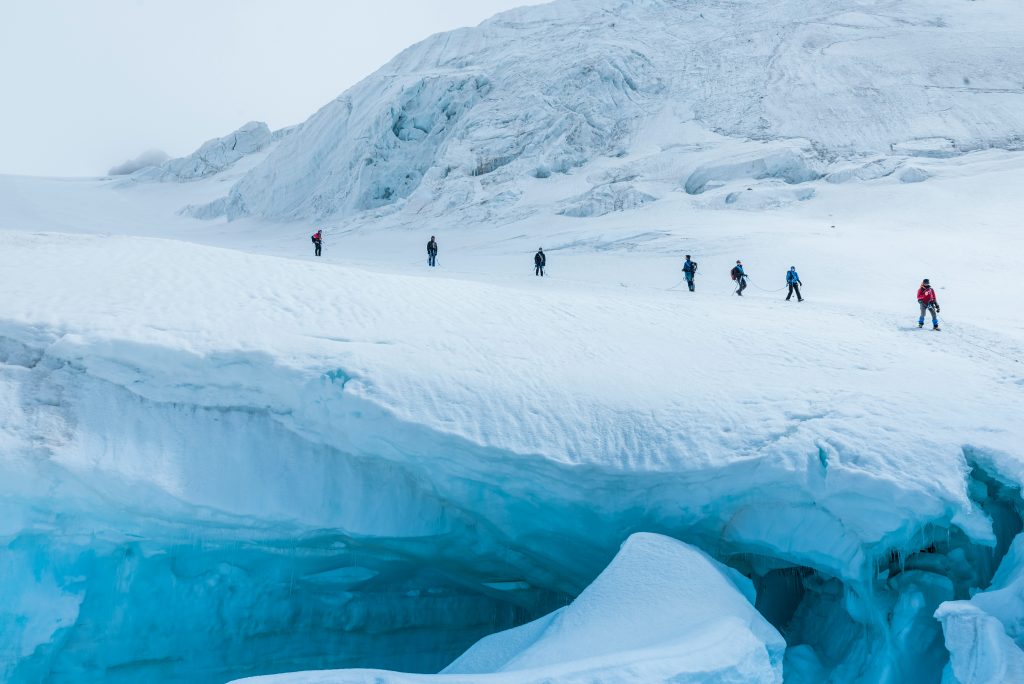
Altitude sickness (acute mountain sickness) is the single biggest factor when we design a trekking or expedition itinerary. It’s not caution for caution’s sake: more than anything else, it decides whether someone reaches their goal safe and sound. And it can hit anyone. It doesn’t matter how fit you are: a twenty-five-year-old fresh out of the gym can get it just as badly as someone less trained. It comes down to how your body handles a lack of oxygen, not how much you can lift.
From around 2,500-3,000 meters you already feel it. At that height, each breath brings in around 25–30% less oxygen than at sea level. The air has the same share of oxygen as at the beach, but it’s thinner, because air pressure drops as you go up: every breath takes in less air, and less oxygen with it. And the risk keeps climbing with every night you sleep higher. That’s why acclimatization isn’t an add-on to the itinerary. It is the itinerary.
Symptoms to Watch For
The first warning sign is usually a headache, often with odd fatigue, dizziness, nausea or loss of appetite. They feel a lot like a hangover and usually show up 2 to 12 hours after you arrive at altitude. A headache together with any of the others is the classic sign that your body isn’t keeping up with how fast you’re climbing. Poor sleep is very common at altitude, but on its own it isn’t a sign of altitude sickness. And here’s the part that matters most: if you’re not feeling right, you tell your guide then and there. Don’t wait until the end of the day.
If it’s ignored and the climb keeps going, things can get serious fast. High Altitude Cerebral Edema (HACE) shows up as confusion, losing your coordination while walking, acting like you’ve had too much to drink, and it can reach a coma in under 24 hours. High Altitude Pulmonary Edema (HAPE) starts with a cough and a fatigue that’s out of proportion to the effort, and can end with breathlessness even at rest. Both are real medical emergencies, and in both cases the first move is the same: go down. The sooner, the better.
How It's Prevented
Real prevention has nothing to do with miracle pills. It’s about the pace you climb at. Above 3,000 m, the usual guidance is to gain no more than 500 m of sleeping altitude a night, and add an extra acclimatization day for every extra 1,000 m you climb to sleep. And never go higher to sleep while you have symptoms, however mild. Walking slowly is part of the same idea, and it isn’t us holding you back for the sake of it. Up there your body is already working hard just to get enough oxygen, and every extra effort adds to that load. The less you push, the more energy your body has left to adapt. That’s why the guide sets a pace at which you can still talk, and why you’ll hear “slowly, slowly” all the way up.
Water matters too. At altitude you lose much more water than usual: the air is cold and dry, you breathe faster and deeper, and every breath carries moisture out of your body, on top of what you sweat in the sun. Dehydration doesn’t cause altitude sickness, but it makes you feel worse, and its symptoms (headache, tiredness) are easy to confuse with it. Around 3–4 litres a day is the usual recommendation on a trek. Skip alcohol for the first 48 hours and eat well. None of it replaces the time your body needs.
And Diamox (acetazolamide), which you’ve probably heard of: there are studies showing it can help speed up acclimatization and lower risk in some cases. We don’t take a position on it or prescribe it, that’s a conversation to have with your own doctor before you travel, based on your specific case. Whether you take it or not, what’s non-negotiable is an itinerary with enough acclimatization built in. The pill can help, but it doesn’t replace the days your body needs.
Acclimatization Is Never Cut Short, No Matter What
At Thin Air we build itineraries with the acclimatization they actually need, full stop. Safety comes first, always, even if that means one more day on the trip or a bit more cost. It’s a real problem in this industry: there are agencies out there that aren’t specialized in high-altitude mountaineering and cut acclimatization days to sell a shorter or cheaper package, then cover that gap with medication instead of time. That’s playing with people’s safety, and we don’t do that.
Our guides are officially licensed and know how to spot symptoms in time, and if someone needs to come down, they come down, no drama but no hesitation either. We carry a medical kit and, depending on the destination, a satellite phone, so we can act fast if something goes wrong.
See our high-altitude destinations: Mera Peak · Aconcagua · Island Peak · Lobuche East · Elbrus · Kilimanjaro · Everest Base Camp · Mount Kenya
Don't miss a thing
New departures, offers and mountain tips. Sign up and get $50 off your first trip from $1,000.